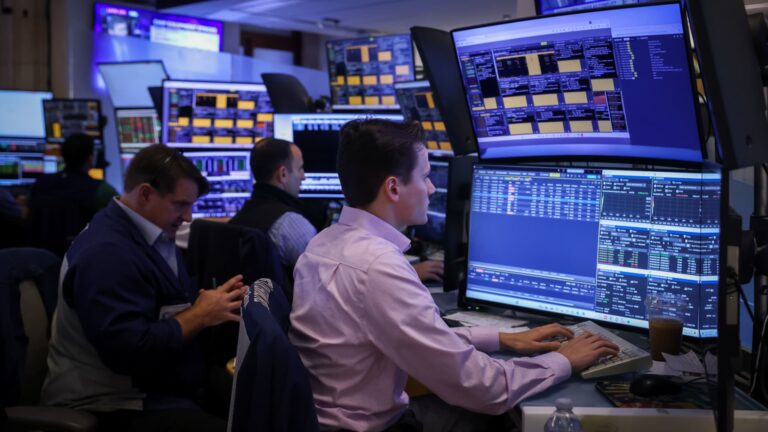
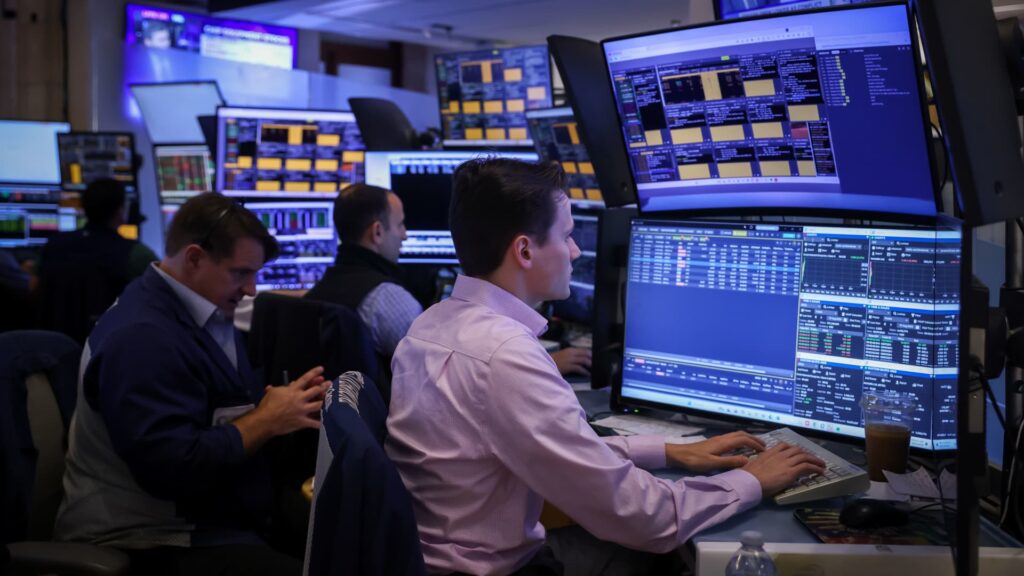
Stocks kicked off September on shaky footing as higher oil prices and Treasury yields tested investors’ appetite for some of the market’s biggest artificial intelligence winners. For the week, the S & P 500 eked out a 0.1% gain, while the Nasdaq gained 0.4%, recovering from a rough start to the historically difficult month of September. Both indexes turned in their fifth weekly gains out of the past six. A stronger-than-expected August jobs report sent bond yields higher Friday, with the 2-year Treasury yield hitting its highest level since January 2025. The report added to inflation concerns already stoked by rising oil prices amid renewed fighting between the U.S. and Iran. The market odds of a September Federal Reserve interest rate hike went to 58%, up from 49.4% a day earlier, according to the CME FedWatch tool . Here’s a closer look at three developments that drove our portfolio last week. We’re balancing out our AI exposure We made some meaningful changes to the portfolio last week, reducing our exposure to some of the AI buildout’s biggest winners, which recently fell out of favor, while adding more defensive names. Even Nvidia ‘s blowout earnings the prior week failed to spark a broader AI rally, reinforcing our concern that investors are becoming less willing to reward even strong results across the group. On Monday, we trimmed Palo Alto Networks ahead of its earnings Tuesday evening, locking in a roughly 148% gain on shares purchased in August 2024. The sale was about holding onto gains after the stock’s more than 80% run this year. Some of the air did come out of that rally since all-time highs in mid-August. This move did not change our conviction that AI will drive greater cybersecurity spending. We exited Corning on Tuesday, locking in an average 52% gain. While still up 70% this year, shares have dropped more than 40% since record highs in late June. On Wednesday, we redeployed some of that capital into BNY and Kimberly-Clark , each starting at roughly 1% weightings in the portfolio. BNY adds a less cyclical, fee-driven financial. Kimberly-Clark offers a cheaper valuation, a 4.75% dividend yield, and a potential catalyst from its pending Kenvue acquisition . We also added to Micron on Thursday, bringing the position to about 1%. Our conviction remains high as AI-driven memory demand continues to outstrip supply, supported by bullish long-term outlooks from Nvidia. Good earnings aren’t good enough Despite better-than-expected revenue and earnings and a bullish long-term AI outlook on Wednesday, the market remains reluctant to reward Broadcom’s growth. CEO Hock Tan raised his fiscal 2027 AI revenue forecast to $115 billion and expects it to double to $230 billion in fiscal 2028. Still, concerns around customer concentration, vendor financing, and data center pushback continue to weigh on the stock. We lowered our price target to $430 from $480 while maintaining our hold-equivalent 2 rating. Shares ended the week down 3%. Ahead of earnings the prior week, we sold half of our remaining Broadcom position to reduce exposure to the AI data center buildout. “The only regret I have is … I didn’t just get rid of it all,” Jim Cramer said during Thursday’s Morning Meeting. But, at this point, Jim said he’s willing to hold the remaining position because of Broadcom’s deepening relationship with AI startup Anthropic, which is set to go public this fall. Palo Alto Networks also delivered strong results after Tuesday’s close. The quarter reinforced our view that AI is a major tailwind for cybersecurity. After Wednesday’s rout in the stock, we were glad we trimmed going into the print. We did upgrade Palo Alto to a hold-equivalent 2 from our sell-on-strength 3 rating following Wednesday’s pullback and raised our price target to $400 from $380 on Tuesday night. CEO Nikesh Arora said roughly $1 trillion of global cybersecurity infrastructure needs to be modernized to defend against emerging threats. “You cannot deploy AI successfully if you do not get cybersecurity right,” he said on CNBC’s ” Mad Money ” on Tuesday. Shares nevertheless sold off on profit-taking, leaving Palo Alto as the portfolio’s worst performer last week, losing more than 10%. Nvidia deepens its AI moat, again Nvidia’s $12.9 billion acquisition of Hugging Face strengthens the ecosystem around its chips by giving it access to an open-source AI platform used by more than 18 million developers. We see parallels to Microsoft’s 2018 purchase of GitHub . Rather than directly monetizing the platform, Nvidia can deepen developer loyalty, make its hardware and software a natural choice for deploying AI models, and keep a strategic asset out of competitors’ hands. The deal also helps Nvidia hedge against hyperscalers’ custom chips. Whether developers use open-source or proprietary models, both require massive amounts of compute. As long as AI adoption keeps expanding, Nvidia stands to benefit. Despite gaining roughly 22% this year, Nvidia trades at just 14 times next year’s expected earnings. Jim said that remains too cheap given the company’s growth and expanding AI ecosystem. He said a larger share buyback could provide another catalyst for the stock, which rose 6% last week, edging ever closer to getting back to mid-May record highs. (See here for a full list of the stocks in Jim Cramer’s Charitable Trust.) As a subscriber to the CNBC Investing Club with Jim Cramer, you will receive a trade alert before Jim makes a trade. Jim waits 45 minutes after sending a trade alert before buying or selling a stock in his charitable trust’s portfolio. If Jim has talked about a stock on CNBC TV, he waits 72 hours after issuing the trade alert before executing the trade. THE ABOVE INVESTING CLUB INFORMATION IS SUBJECT TO OUR TERMS AND CONDITIONS AND PRIVACY POLICY , TOGETHER WITH OUR DISCLAIMER . NO FIDUCIARY OBLIGATION OR DUTY EXISTS, OR IS CREATED, BY VIRTUE OF YOUR RECEIPT OF ANY INFORMATION PROVIDED IN CONNECTION WITH THE INVESTING CLUB. NO SPECIFIC OUTCOME OR PROFIT IS GUARANTEED.