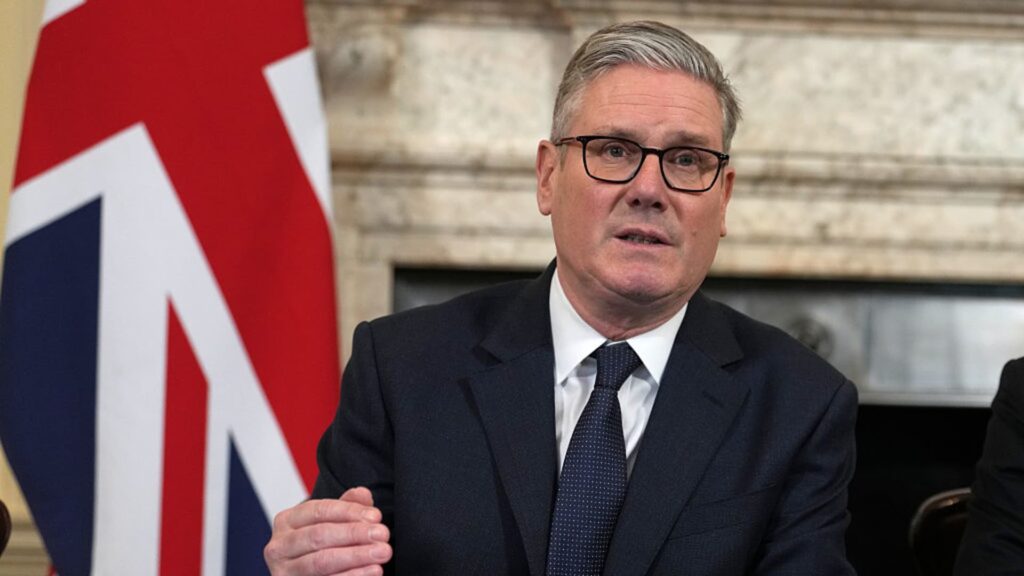
U.S. President Donald Trump speaks in the Oval Office at the White House in Washington, D.C., U.S., June 11, 2026.
Daniel Heuer | Reuters
The U.S. and Iran have agreed on a deal to bring their nearly four-month war to an end, with both sides declaring the immediate and permanent termination of military operations on all fronts, including in Lebanon, Pakistan Prime Minister Shehbaz Sharif said on Sunday.
“Following intensive talks, we are pleased to announce that the Peace Deal between the United States of America and Islamic Republic of Iran has been REACHED,” Sharif said in a post on X. Pakistan has served as a mediator between the two countries.
“The official signing ceremony will be on Friday, 19 June in Switzerland,” Sharif said.
On Friday, Iranian state media reported that a 14-page draft memorandum had been drawn up, outlining terms of a proposed peace deal that would include the U.S. lifting oil sanctions and Iran committing to reopening the Strait of Hormuz within 30 days.
The deal follows weeks of mixed messaging from both Washington and Tehran over the conflict’s trajectory, with a fragile ceasefire in place as diplomatic efforts were made to end the war.
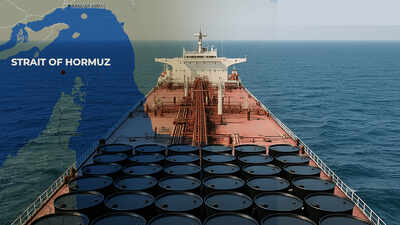
The Strait of Hormuz, a critical shipping route in the Middle East, has effectively been closed since the conflict began in late February. The blockade of the waterway has created severe supply constraints for various goods, including oil, gas and fertilizers, sparking price rises and fueling concerns about a return to stagflation.
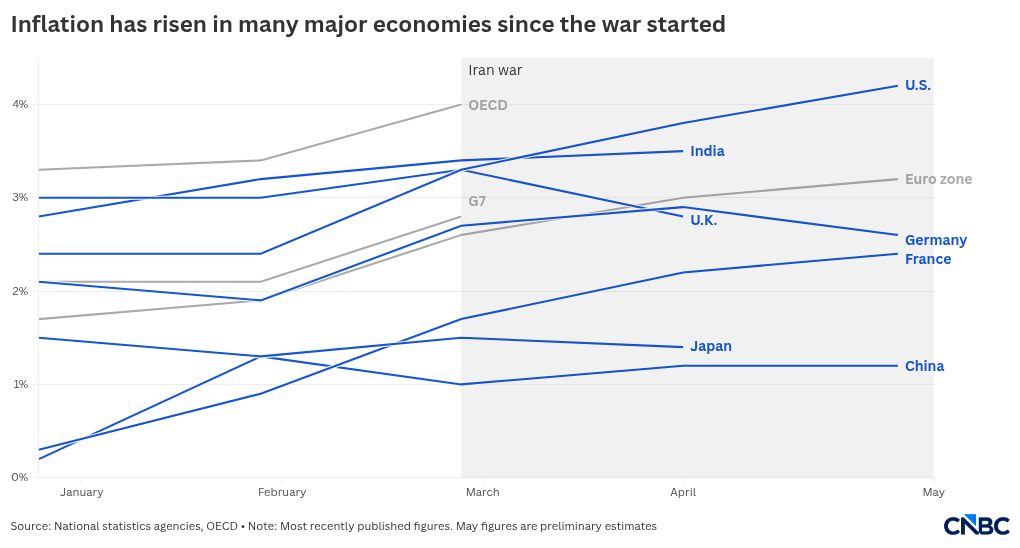
Inflation has already begun to creep higher in many major economies, with America’s annual inflation rate hitting 4.2% in May – its highest level in three years.
On Thursday, the European Central Bank announced a quarter-point rate hike, raising interest rates for the first time since 2023 as the Iran war continues to blow euro zone inflation off target.
The move made the ECB the first major global central bank to raise its key interest rate in response to the energy shock.
Market expectations have shifted throughout the war, with broad rate-cut expectations fading and being replaced by higher-for-longer interest-rate environments across economies.
The Federal Reserve is now expected to raise interest rates before the end of this year, according to the CME’s FedWatch tool.