
People stand near over water hoses spilling water to provide relief from the summer heat as part of Cologne’s climate adaptation measures in Cologne, western Germany on June 25, 2026 during a heatwave in Europe.
Ina Fassbender | Afp | Getty Images
Hello, this is Anniek Bao writing to you from Singapore. Welcome to another edition of CNBC’s Daily Open.
It was a weekend of stalled diplomacy, and Europe wakes up to the bill — a stalemate priced in oil.
Iran’s foreign minister ruled out any restart of talks with Washington while the U.S. blockade — now 55 redirected ships and counting — stays in place. Israel rejected a Gaza plan Hamas had accepted, refusing to withdraw military until Hamas is fully disarmed.
For a continent importing the bulk of its oil and gas, the returning war premium on crude is a tax on households and industry.
German inflation figures and U.K. GDP due this week will show just how deeply months of elevated energy costs have seeped into prices — and how much growth they have already taken off the table.
What you need to know today
Iranian Foreign Minister Abbas Araghchi said Tehran is not in direct negotiations with the U.S. to end the war and reopen the Strait of Hormuz, saying that “messages are being exchanged through intermediaries.”
In a Sunday interview with Axios, U.S. President Donald Trump said that Washington is “low keying it” in negotiations with Iran. “We are only semi-negotiating with them. We are just watching Iran with its huge inflation and the fact that they have no money,” the president said.
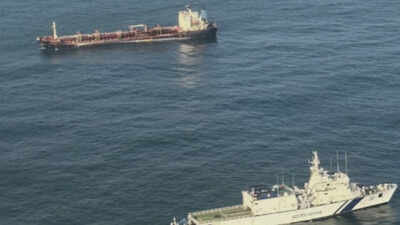
The U.S. military redirected 20 more commercial vessels away from Iranian ports last week, bringing the tally to 55 as of Sunday, up from 35 on Aug. 2 — with two ships disabled and two boarded, according to U.S. Central Command.
Netanyahu rejects Gaza plan
Meanwhile, Israeli Prime Minister Benjamin Netanyahu restated his rejection of Trump’s latest Gaza plan in televised remarks to his right-wing government on Sunday, even as Israel’s military has effectively halted attacks in the territory under pressure from Trump.
Trump announced last month that there had been a breakthrough in his plan to end the war, with Israeli forces withdrawing as Hamas disarms and an International Stabilization Force working with a new Palestinian police force to secure the enclave.
“Israel does not accept the 15-point document,” Netanyahu said at the start of a meeting with his cabinet ministers, saying the Israeli military will not withdraw until Hamas is disarmed.
Axios’ Barak Ravid reported that a senior U.S. official said the White House is “not bothered” by Netanyahu’s statement and sees it as part of the election season in Israel.
Oil grinds higher
Record heatwaves in Europe
Western Europe just logged its hottest June-July on record. The Copernicus Climate Change Service put the two-month average at 21.62°C, beating the 2022 benchmark.
Prolonged hot and dry conditions in western Europe led to the spread and intensification of extreme wildfires in July. The month also saw the highest sea surface temperature ever recorded for July across the extra-polar oceans, partly fuelled by developing El Niño conditions in the equatorial Pacific, according to the agency.
Inflation creeping higher
The extreme heat compounds an expensive summer for Europe, where the war has already pushed up energy costs.
Germany’s final July inflation reading, due Wednesday, is expected to confirm the preliminary estimate of 2.8%, ticking up from 2.6% in May and 2.3% in June, according to economists polled by Reuters.
The U.K.’s second-quarter and June GDP growth, due Thursday, are expected to show the economy still expanding, though more slowly than before.
Economists estimate the economy to have expanded 1.1% in the second quarter from a year earlier, but just 0.4% quarter-on-quarter — decelerating from 0.6% growth seen in the first quarter. For June alone, the U.K. economy is expected to have grown 0.8% from a year earlier, slower than May’s 1.3% growth.
— Anniek Bao
And finally…
Inside the startup drone maker powering Ukraine’s deep-strike campaign
The CEO of Ukraine’s leading arms company says Kyiv has “learned the hard way” that military strength is an essential precursor to diplomacy, describing deep strikes into Russian territory as a core tenet of the country’s pressure campaign.
Missile and drone maker Fire Point, which says it currently facilitates more than 60% of Ukraine’s “long-range sanctions,” has scaled exponentially since being founded in response to Russia’s full-scale invasion in 2022.
The defense-tech startup produced around 200 drones that year, a feat CEO Iryna Terekh described as a “huge achievement.”
Since then, the Kyiv-headquartered startup has swelled from three founding members to more than 7,000 employees and Terekh says it “looks realistic” to expect the team to produce more than 100,000 drones by year-end.
— Sam Meredith