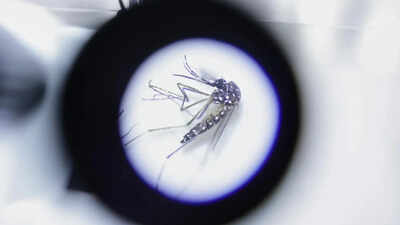
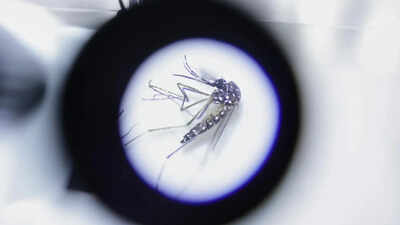
NEW DELHI: Climate change, deforestation, unplanned urbanisation and poor drainage are creating conditions for mosquitoes and other disease-carrying vectors to spread into new areas of the Northeast, a parliamentary health panel has warned, calling for targeted, technology-driven surveillance and prevention strategies.The Department-related Parliamentary Standing Committee on Health and Family Welfare, in its report on vector-borne diseases in North-East India, said the region’s difficult terrain, changing rainfall and temperature patterns, rapid urbanisation and gaps in healthcare access were contributing to the persistence and geographical expansion of these diseases.The numbers show a sharp rise in dengue in the region. Reported cases increased from 142 in 2014 to 19,761 in 2023, before falling to 7,186 in 2024. The report records 1,524 cases in 2025 through August, making it a partial-year figure and therefore not directly comparable with full-year totals.Chikungunya cases in the region increased from 3,493 in 2023 to 3,991 in 2024, an increase of about 14.3%.The panel said dengue and chikungunya are increasingly urban concerns, driven by urbanisation, water-storage practices, poor waste management, climate change and population movement. Sikkim recorded the highest incidence among Northeast states, with 374 dengue cases in 2024. Using the state’s revised population estimate, the dengue incidence was 57.9 per lakh. Sikkim also reported 1,863 chikungunya cases, with an incidence of 291.2 per lakh in 2024.Malaria, however, presents a more mixed picture. Across India, the number of high-burden districts with an Annual Parasite Index above one fell from 155 in 2015 to 37 in 2024. In the Northeast, 16 districts in Arunachal Pradesh and six in Nagaland have reported zero indigenous malaria cases for the past three years.Japanese encephalitis remains another concern, particularly in Assam and other northeastern states. The report records 885 JE cases in the Northeast in 2024, compared with 709 in 2023. Nationally, the JE fatality rate fell substantially, from 17.6% in 2014 to 7.1% in 2024.
Share your thoughts in the comments
Be respectful · TOI community guidelines
The panel recommended real-time surveillance through a dedicated Northeast vector-borne disease portal and AI-based early-warning systems to predict hotspots, along with mobile health units, pre-monsoon camps, rapid-response teams, stronger labs and dedicated NESIDS funding for high-risk areas. It also called for disease-specific treatment protocols for severe dengue and other complications, a Regional Entomology Training Hub, and greater use of climate modelling and digital reporting. The panel flagged a data gap too: vector-borne disease data are not separately collected for tribal, rural and urban populations, and recommended doing so for more targeted interventions.