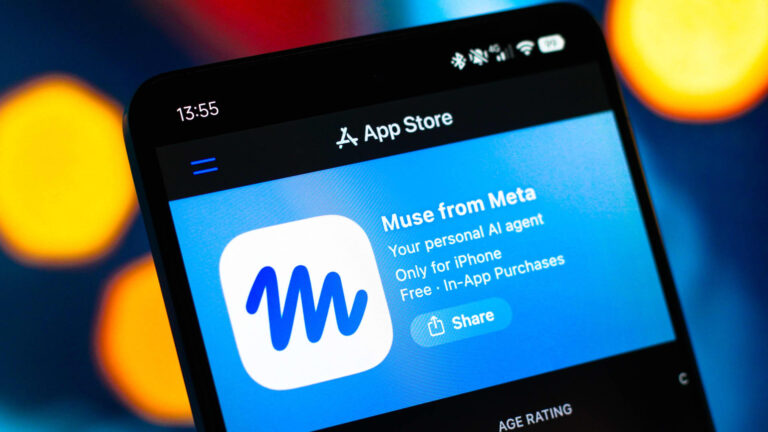

Meta Platforms is wasting no time bringing its new enterprise AI ambitions directly to business owners — starting where it already has a massive foothold. The social media giant on Tuesday launched Muse for Small Business , a version of its popular AI agent designed to help entrepreneurs automate everyday tasks — from communicating directly with customers to managing cash flow and inventory processes to creating websites. “It is the next iteration of Muse,” Meta President and Vice Chairman Dina Powell McCormick said in an interview that will run Tuesday evening on ” Mad Money .” “It’s basically allowing small business owners to take the most precious thing they have, their time, and to use it on building their business for the future, not worrying about the back-office work.” (Part of the discussion aired on ” Squawk on the Street .”) The news follows Monday’s announcement of Meta Enterprise Platform — a new business to be headed by experienced tech executive CJ Desai, who left his role as CEO of MongoDB to join Meta. The division will bring together all of Meta’s AI efforts, including the consumer and business applications of its Muse agent, which has been having a ChatGPT-type moment since launching earlier this month. It makes sense to tap into small businesses, which are fertile ground for Meta due to its deep ties to them through Facebook and Instagram. “We have 200 million small business owners on our platform at Meta,” Powell McCormick told Jim Cramer. “That really means we have connectivity with so many of these small business owners that are now going from using our products to operate them, to advertise their goods on the platform, but now to actually have Muse for Small Business hustle and work for them every day.” Muse for Small Business can connect directly to professional Facebook and Instagram accounts and Meta advertising accounts, along with widely used workplace software from companies including Zoom Communications , QuickBooks parent Intuit , and Club holding Salesforce ‘s Slack. Rather than asking small-business owners to adopt an entirely new ecosystem, Meta can bring Muse into the tools they already use. For now, Muse for Small Business does not need to become a major earnings contributor for us to view the launch positively. We see the potential and so does Jefferies. In a note to clients last week, the analysts said they see a path to meaningful Muse subscription revenue emerging. In a scenario where Muse reaches 1 billion users by the end of 2027, converts 3% of them to paid subscribers, and generates an average of $30 per month, the analysts at Jefferies estimate that the service could reach $10.8 billion in annualized subscription revenue, with business customers offering additional upside. Small businesses could be particularly receptive to AI agents because many lack the staff and resources of larger companies. Muse for Small Business follows the same pricing model as the consumer version of the agent, with a free tier subject to usage limits and paid subscriptions beyond that. While the opportunity is another potential way for Meta to monetize its massive AI investments, it must first prove that small businesses will use Muse regularly, trust it with important tasks, and ultimately pay for the service. It will also face intense competition as AI and software companies race to bring agents into the workplace. Meta shares have surged 26% in September as investors have grown more optimistic about the company’s AI strategy. The expansion of Muse into businesses gives us another reason to believe Meta’s hundreds of billions of dollars in AI investments can create new revenue streams — and potentially earn the stock a higher price-to-earnings valuation. Its current P/E is just 14.6 times 2029 earnings-per-share estimates, according to FactSet. It has historically traded like a consumer business. However, “enterprise companies get high multiples,” Jim said on Tuesday’s “Morning Meeting,” meaning a successful push into the business end of the market could eventually give investors reason to pay more for Meta’s earnings. (Jim Cramer’s Charitable Trust is long CRM, META. See here for a full list of the stocks.) As a subscriber to the CNBC Investing Club with Jim Cramer, you will receive a trade alert before Jim makes a trade. Jim waits 45 minutes after sending a trade alert before buying or selling a stock in his charitable trust’s portfolio. If Jim has talked about a stock on CNBC TV, he waits 72 hours after issuing the trade alert before executing the trade. THE ABOVE INVESTING CLUB INFORMATION IS SUBJECT TO OUR TERMS AND CONDITIONS AND PRIVACY POLICY , TOGETHER WITH OUR DISCLAIMER . NO FIDUCIARY OBLIGATION OR DUTY EXISTS, OR IS CREATED, BY VIRTUE OF YOUR RECEIPT OF ANY INFORMATION PROVIDED IN CONNECTION WITH THE INVESTING CLUB. NO SPECIFIC OUTCOME OR PROFIT IS GUARANTEED.