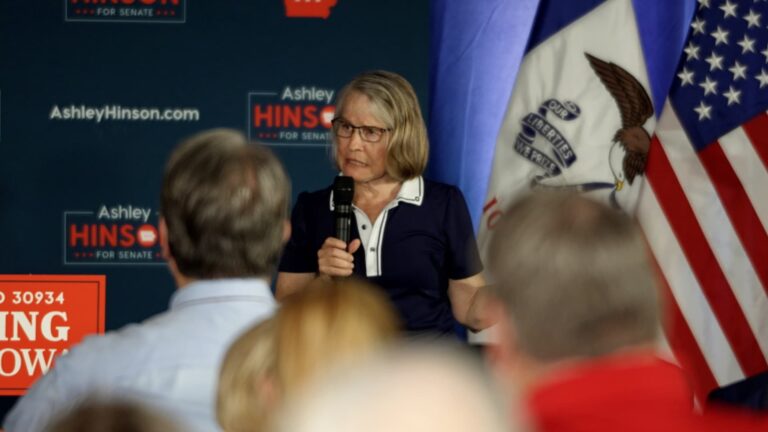
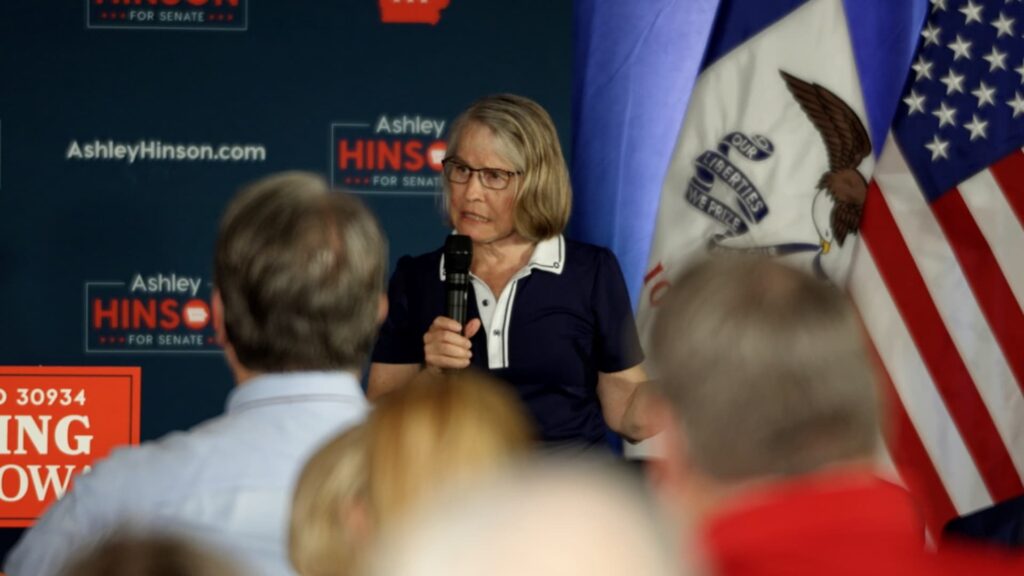
Rep. Mariannette Miller-Meeks, R-Iowa, speaks to supporters at a campaign rally in Bettendorf, Iowa, on May 26, 2026.
CNBC
A judge on Wednesday dismissed Donald Trump’s lawsuit accusing The Des Moines Register and its former pollster of misrepresenting the state of the 2024 presidential race, rejecting the president’s claim that the newspaper’s poll coverage violated Iowa’s consumer fraud law.
Iowa District Judge Scott J. Beattie sided with pollster J. Ann Selzer and the Register, who described the lawsuit as a conspiracy theory and an affront to free speech protections.
The judge wrote that Trump’s suit sought to “stretch both Iowa statutory and common law beyond their current bounds, turning speech that enjoys the highest category of First Amendment protection into a liability.” After hearing the arguments, the judge concluded the constitutional protection “is too great and the reach is too far. The case must therefore be dismissed.”
Trump and his team have filed several lawsuits against media organizations accusing them of bias, calling into question the boundaries of First Amendment protections for speech and press. Some of those lawsuits have ended in settlements.
Trump filed the lawsuit against Selzer, The Des Moines Register and the newspaper’s parent company in December 2024, accusing them of fraudulently publishing inaccurate poll results to damage him and help Democrats, saying coverage of polls is not protected speech.
U.S. Rep. Mariannette Miller-Meeks and former Iowa state Sen. Brad Zaun, both Republicans, joined the lawsuit. Selzer and her co-defendants wanted the case moved to federal court but, after a year of legal proceedings, the first hearing took place this year in state court.
The poll, conducted by Selzer’s company in the final days of October and released just days before Election Day 2024, showed then-Vice President Kamala Harris, the Democrats’ presidential nominee, capturing 47% of Iowa likely voters, to Trump’s 44%.
Trump ultimately won the support of 56% of the nearly 2 million Iowans who voted.
Trump, Miller-Meeks and Zaun alleged the misleading coverage diminished their reputations, valuable time in the final days of the campaign, and campaign funds and resources.
Selzer’s case was taken up by the free speech advocacy group Foundation for Individual Rights and Expression. In separate filings, the Iowa pollster and The Register, with its parent company, Gannett Co., argued that courts have never considered polls or newspapers covering them to be commercial speech even though they may be sold for a profit.
They said the poll coverage, whether right or wrong in capturing the state of the race, was constitutionally protected political speech.
They also disputed the consumer fraud claim, emphasizing the poll and coverage of it were not connected to transactions between the companies and Trump, Miller-Meeks or Zaun.