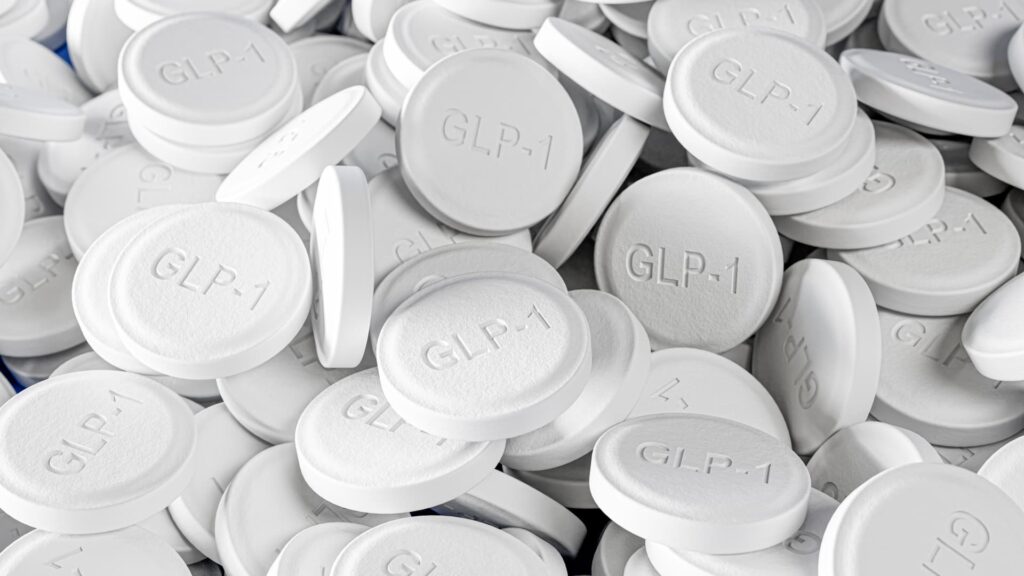
The U.S. Food and Drug Administration is requiring new safety warnings on all GLP-1 drugs after finding evidence of a potential increased risk of a rare eye condition, the agency said on Monday.
The condition, which can cause sudden vision loss, known as nonarteritic anterior ischemic optic neuropathy (NAION), is rare, and a causal relationship has not been established.
The FDA is requiring the makers of all GLP-1 medications to add a warning about the potential increased risk of NAION associated with use of these medications, it said.
NAION is a condition that can result in sudden decreased vision, including permanent vision loss. It is caused by decreased blood flow to the front part of the optic nerve — the underlying cause is not completely understood, however.
NAION cases have been reported for all currently marketed GLP-1 products, the FDA said.
CNBC has reached out to Ozempic and Wegovy maker Novo Nordisk and Eli Lilly, the company behind Mounjaro, Zepbound and Foundayo, for comment.
The FDA decision follows a review of clinical trials, real-world patient data, and published studies.
An analysis of 126 trials involving more than 134,000 patients found 6.4 cases of NAION per 100,000 patient-years among GLP-1 users, compared with 3.8 among patients receiving other treatments or placebos.
Several observational studies also identified an increased risk, supporting the FDA’s concerns.
The FDA’s class-wide labeling action is “likely to attract attention but should have limited impact on GLP-1 uptake,” according to Citi analysts.
It may temporarily increase patient and investor concern, but the rarity of NAION and substantial weight, glycemic, cardiovascular, renal, and sleep apnea benefits should preserve a favorable benefit-risk profile and limit changes to prescribing the medicines, they added.
While GLP-1 drugs have been shown to lead to benefits beyond weight loss and controlling blood sugar levels, many also carry the FDA’s strongest safety warning, known as a boxed warning, over a potential risk of thyroid tumors.
Studies have shown that semaglutide, the active ingredient in Wegovy and Ozempic, and tirzepatide, the active ingredient in Mounjaro, cause thyroid C-cell tumors in rodents. It remains unknown whether the drugs cause these tumors, including a rare form of thyroid cancer, in humans.