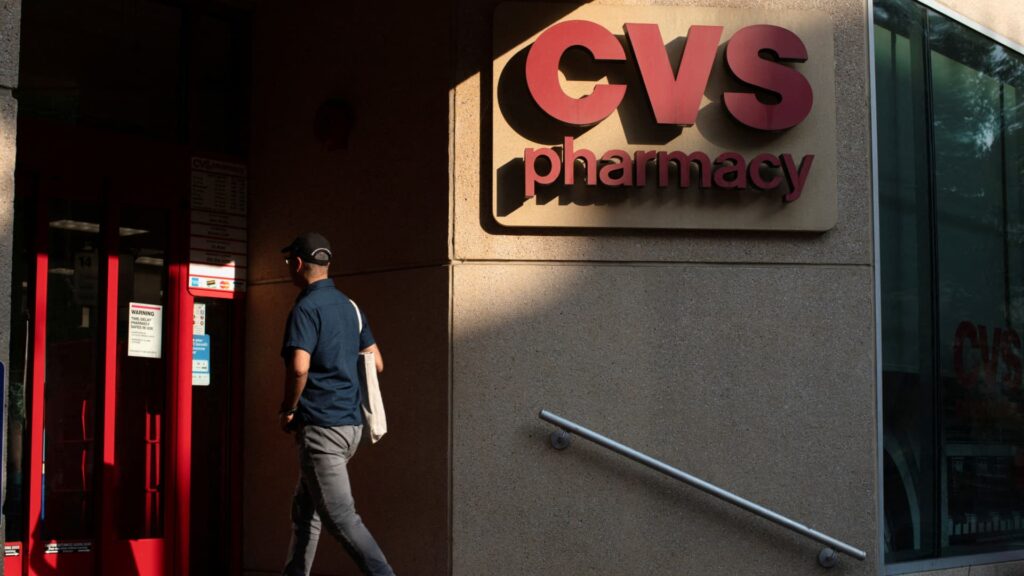
CVS Health plans to split into two separate public companies by the first half 2028 in what would be one of the largest corporate splits in history, the company announced Wednesday.
The move would reverse the company’s massive $78 billion acquisition of its insurer, Aetna, and dismantle the vertically integrated healthcare conglomerate it created in 2018. The plan would specifically separate CVS’s roughly 9,000 retail pharmacies from its major insurance business and pharmacy benefit manager, Caremark, one of the nation’s three largest PBMs.
The decision follows a “comprehensive strategic review” by the company’s board of directors, according to a news release.
It’s a stunning reversal for the healthcare powerhouse, which has spent the last two decades working to turn itself into a one-stop health destination. The move also comes as CVS’s aggressive turnaround plan under CEO David Joyner shows substantial progress, with the company pursuing $2 billion in cost cuts, store closures, leadership shakeups and efforts to rein in Medicare Advantage costs.
“From a position of strength, and a focus on the long term, we plan to create two focused companies to improve consumer engagement, affordability, and care coordination,” Joyner said in the release.
Shares have jumped roughly 70% since Joyner took the helm in October 2024, bringing the company’s market value to $117 billion.
The two new companies would both be publicly traded.
The insurance and PBM company will retain the CVS Health name and be run by Joyner, while the other company will be called CVS Pharmacy and be led by Prem Shah, who is currently group president of CVS Health. Additional leadership positions and board members will be announced at a later date, CVS said.
Existing CVS shareholders will own shares in both companies after the split. The Financial Times on Tuesday first reported the breakup plans.
The company’s pharmacy business raked in $37.66 billion in 2025 sales, while its insurance unit booked $36.29 billion in revenue and healthcare services segment generated $51.24 billion.
On Tuesday, CVS also said it will lump its insurer and PBM with its primary care business Oak Street Health, home-visit provider Signify Health and the company’s specialty drug business.
CVS also said the split will allow the two companies to experience a “focused strategic agenda” and greater ability to “innovate, adopt technology, increase efficiency,” among other benefits.
It’s not the first time CVS has weighed splitting the company. In October 2024, CVS engaged advisors in a strategic review of its business and considered breaking up its retail pharmacy and insurance units.
Even so, Leerink Partners analyst Michael Cherny said the split “feels like a complete shock” in a Tuesday note. But he said that the retail pharmacy business has been performing well, winning market share from competitors and seeing stabilizing gross margins thanks to CostVantage, a new pharmacy reimbursement model introduced by CVS last year.
“In this context, perhaps the outlook for a standalone retail pharmacy (still with meaningful scale and leverage on its own) is stronger now than before,” Cherny wrote.
He added that “the rationale could also be to avoid what has been relentless state legislative scrutiny over the company’s level of vertical integration.”
The potential breakup also comes as pharmacy benefit managers face mounting bipartisan scrutiny in Washington, D.C., and across states.
PBMs, which negotiate drug prices and manage prescription drug benefits on behalf of insurers and employers, have been criticized for opaque pricing practices, their growing market power and potential conflicts of interest when they are owned by companies that also operate insurers and pharmacies.
Congress enacted PBM reforms in February, including provisions to change how PBMs are compensated under Medicare Part D. Meanwhile, states have increasingly moved to restrict PBMs’ ownership of pharmacies.