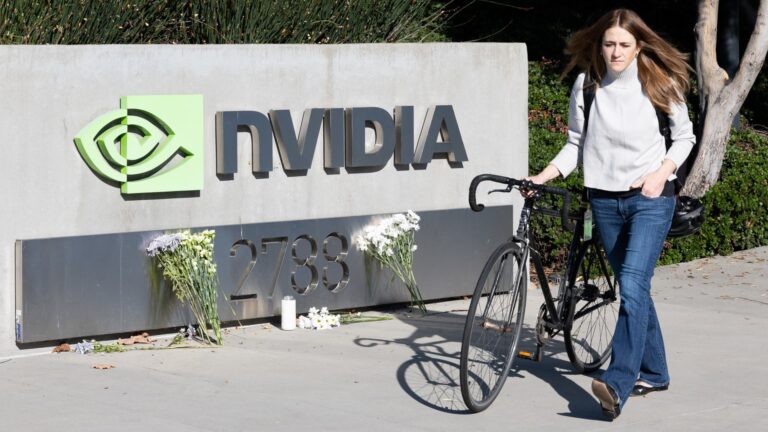
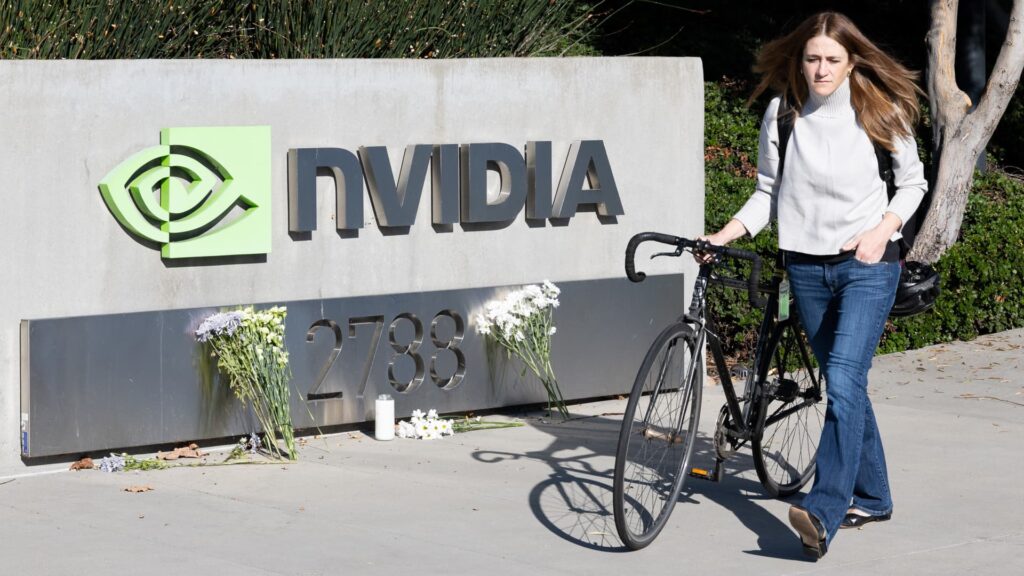
A pedestrian walks in front of a Nvidia sign outside the company’s headquarters on November 12, 2026 in Santa Clara, California.
Benjamin Fanjoy | Getty Images
The Commerce Department moved on Monday to close a loophole that has let Chinese companies lease Nvidia‘s advanced computing power from data centers in third countries, effectively circumventing controls on sensitive technology being exported to China.
Commerce’s action, an interim final rule issued by its Bureau of Industry and Security, is the first U.S. policy response to the scandal at Nvidia that led CEO Jensen Huang to resign last week.
The department, in a press release, said that the BIS rule was “written by and at the direction of the Department of Treasury and the National Security Council.”
The rule came after rising criticism of Commerce Secretary Howard Lutnick, who has been accused of not doing enough to prevent possible diversion of Nvidia’s most advanced chips to China in violation of American export controls.
Read more CNBC politics and policy coverage
Treasury Secretary Scott Bessent, in an interview on Friday with CNBC’s “Squawk Box,” blamed the Commerce Department for not putting Megaspeed, the Singapore-based company at the center the Nvidia scandal, on the so-called entity list, which would restrict certain exports to it.
Share prices of Nvidia and other companies linked to artificial intelligence trade fell after the interim rule was announced, among them the chipmakers Micron Technology, Intel and Advanced Micro Devices.
“The Department of Commerce is establishing new rules to prevent certain foreign actors from leveraging advanced computing power based on U.S. technology to threaten U.S. national security and foreign policy interests,” the IFR issued Monday says.
“These restrictions will undermine the ability of companies headquartered in countries of concern from using U.S. advanced Super Intelligence (SI) semiconductors to train advanced SI models,” the rule said.
The rule also says that a license will now “be required to export, reexport, or transfer (in-country) advanced semiconductors to Indonesia, Malaysia, Singapore, Thailand, or Brazil (and any additional country designated by the Secretary of Commerce, in consultation with the Secretary of State or the Assistant to the President for National Security Affairs) – countries which present a higher-than-normal risk of diversion.”