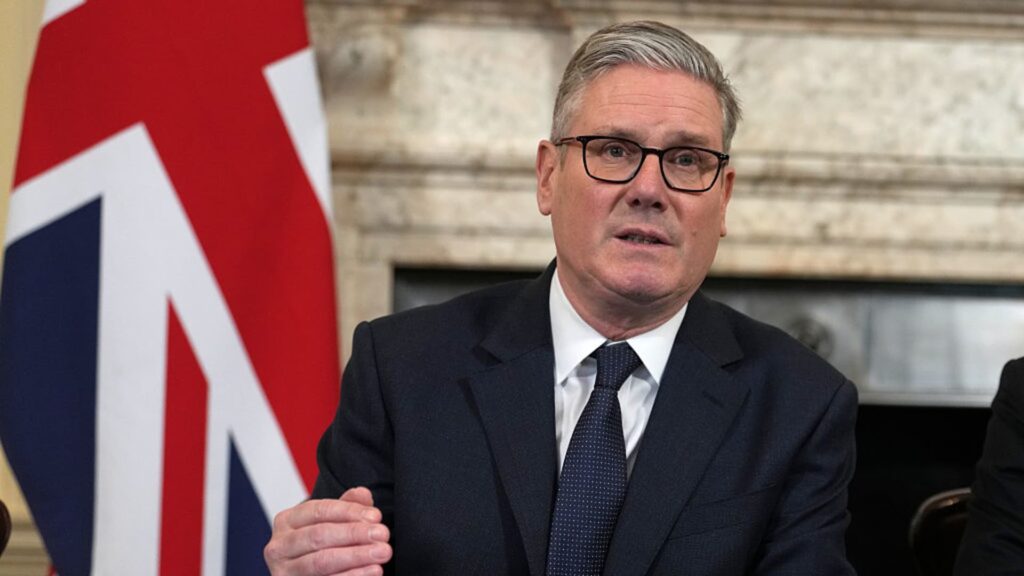
Scott Bessent, Treasury Secretary, speaking a the CNBC Invest in America Forum in Washington, D.C. on April 15th, 2026.
CNBC
Investors over the past several days have priced in a likelihood of higher inflation ahead, a potential sign that the Treasury Department’s efforts this week to improve liquidity in the government debt market are raising concerns over broader policy implications.
The so-called breakeven rate, a market-based measure that compares Treasury yields to inflation-protected securities of the same maturity, rose across the curve, hitting its highest level in more than two months. Breakevens reflect inflation expectations as well as compensation investors seek for inflation risk and other factors.
At the 10-year horizon, the breakeven rate rose to 2.34% on Thursday, its highest since June 10. Five-year breakevens hit the same level, the highest since June 16. While the measures can be volatile and still imply the market doesn’t expect runaway inflation, they also indicate that inflation worries are rising.
The concern follows a Treasury announcement Wednesday saying it will be at least doubling the size of its typical $2 billion debt buyback, a routine operation begun in 2024 that helps provide a market for longer-dated debt.

Though Treasury Secretary Scott Bessent insisted the move wasn’t an attempt to tamp down yields, it came after the 10- and 30-year Treasurys hit levels not seen since prior to the global financial crisis in 2008.
“The background here is very unforgiving at the moment, There’s this cocktail of concerns that has risen up,” said Van Hesser, chief strategist at KBRA, a credit and bond rating agency.
Traders pricing in higher inflation “fits into the backdrop where people are concerned about inflation, and and that continues to lean on the market. These things sort of come and go. I think there are all of these these risks have been out there, and many of them for some time now. They they flare up from time to time and manifest themselves in markets.”
Negative market reaction
The rise in market-based inflation expectations follows a general pattern this week.
While long-dated Treasury yields plunged the day of the buyback announcement, they rebounded Thursday and were up again Friday. The 10-year benchmark stood at 4.73% in early afternoon trading, up 3.4 basis points on the day and higher than the pre-announcement level.
Similarly, the 30-year yield climbed 3.6 basis points to 5.27%, while yields also were up on shorter-dated issues. Treasury is required to offset the buybacks of long-dated debt by issuing shorter-term bills.
The jump in yield has been tied to a number of factors, inflation fears prominent among them. Treasurys also have been forced to compete against higher-yielding government debt in Asia and Europe, a record-setting surge of issuance from hyperscalers investing in artificial intelligence, and a general rise in term premiums, or the extra yield investors demand for holding U.S. debt, which surpassed the $40 trillion mark this week.

Treasury yields
While yields rose, the dollar also weakened, continuing a trend this week that has seen the greenback lose nearly 0.9%.
The dollar move “too, may be the result of ‘read-through’ of the Treasury announcement to the prospect of looser Fed policies,” wrote Thierry Wizman, Macquarie Group’s global foreign exchange and rates strategist.
“Upon the announcement of the buyback increase and the ‘signaling effect’ it mustered, the 10-year breakeven rose by about 6-7 bps – not insignificant. That’s as if to say that something about the announcement was ‘inflationary,'” Wizman added.
Treasury Department officials did not respond to a request for comment.
Warsh on deck
The market’s response ups the ante for Fed Chairman Kevin Warsh, who is scheduled to deliver his closely watched keynote on Aug. 28 at the central bank’s annual symposium in Jackson Hole, Wyo.
Prior statements by Warsh in which he endorsed the Fed having a reduced role in markets were interpreted by markets as being dovish on inflation.
Wizman noted that “were Warsh to signal that he would stay ‘dovish’ indefinitely, it could be self-defeating for him and the Treasury, since inflation breakevens would rise further, perhaps undoing the stability in the nominal long-term yields that [Treasury Secretary] Scott Bessent is trying to achieve.”
Still, some in the market don’t see the recent yield spike as cause for concern.

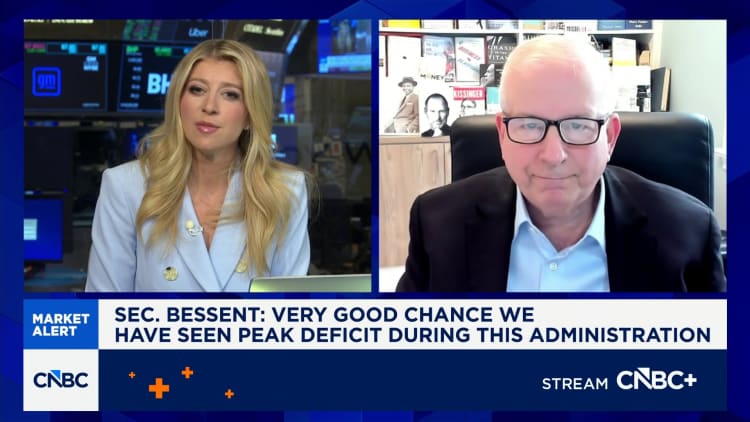
David Zervos, the chief market strategist at Jefferies, pointed out in a CNBC interview that the 10-year note is in “one of the tightest ranges” it has seen in 20 years. “It’s not running away from anybody,” he said.
“What we’re seeing is a different kind of Treasury secretary, someone who’s willing to come in and be more tactical, and that is something new for the market, and the market’s going to have to adjust to that,” Zervos said.
Likewise, Hesser, the KBRA strategist, said the current yield levels are more in keeping with historical norms, a switch after a prolonged period in which the Fed used its tools to keep rates artificially low.
“A 4 to 5% 10-year is a very constructive level of rates in a thriving economy,” he said. “I think a 4 to 5% tenure is a very healthy rate that allows interest rates to do what interest rates are supposed to do, and that is moderate capital flows through the economy.”