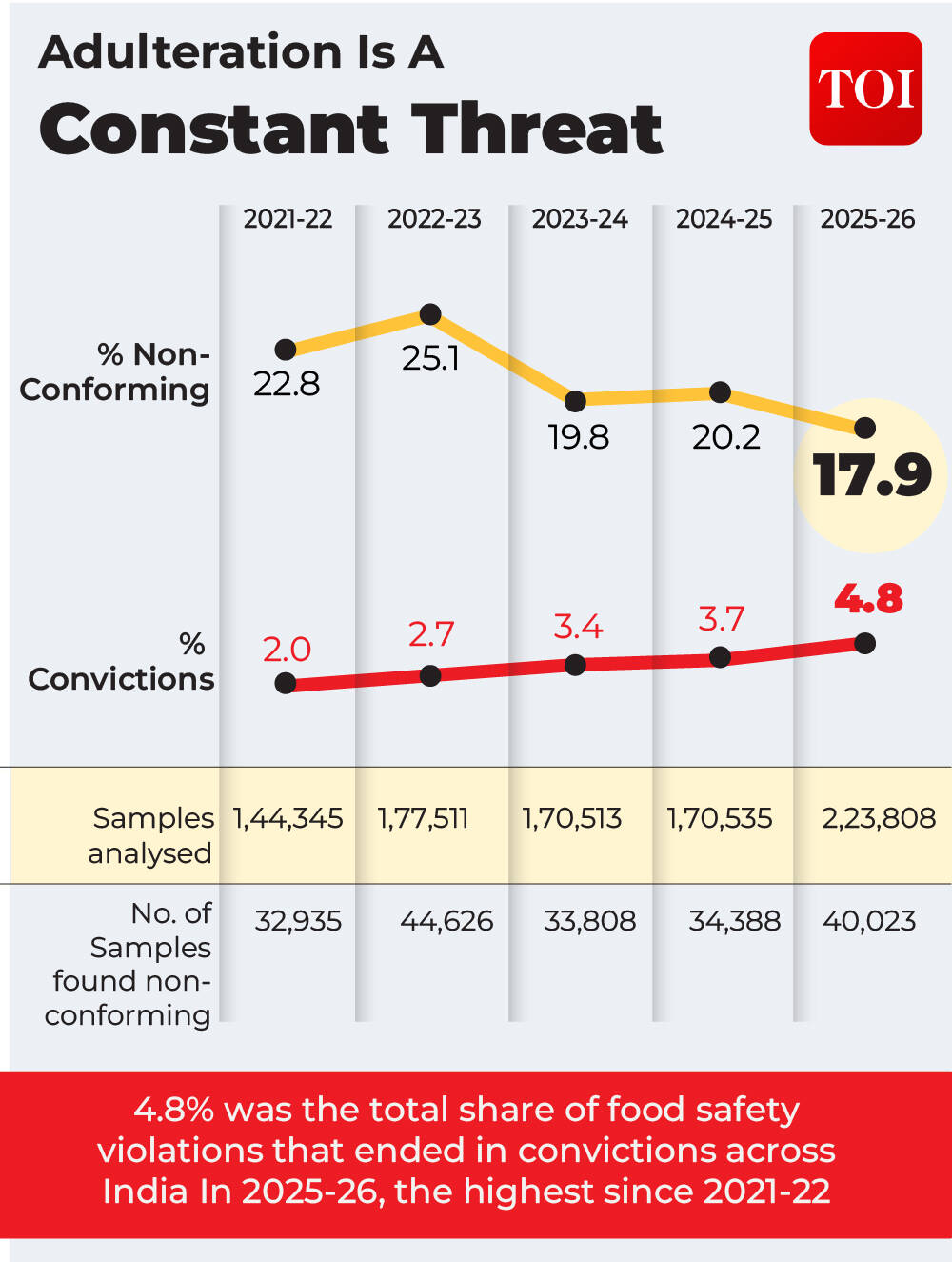
NEW DELHI: Nearly one in five food samples tested across India was found to be non-conforming in 2025-26, even as only 4.8% of food safety violations ended in convictions, highlighting gaps in enforcement and staffing across states, according to data analysed by Richa Gandhi.The share of non-conforming food samples has remained around 20% over the past five years, despite a steady rise in the number of samples tested. In 2025-26, authorities analysed 2,23,808 samples, of which 40,023 were found to be non-conforming.The proportion of non-conforming samples stood at 17.9% in 2025-26, down from 20.2% in 2024-25 and 19.8% in 2023-24. It had peaked at 25.1% in 2022-23.
Food safety checks expose widespread violations
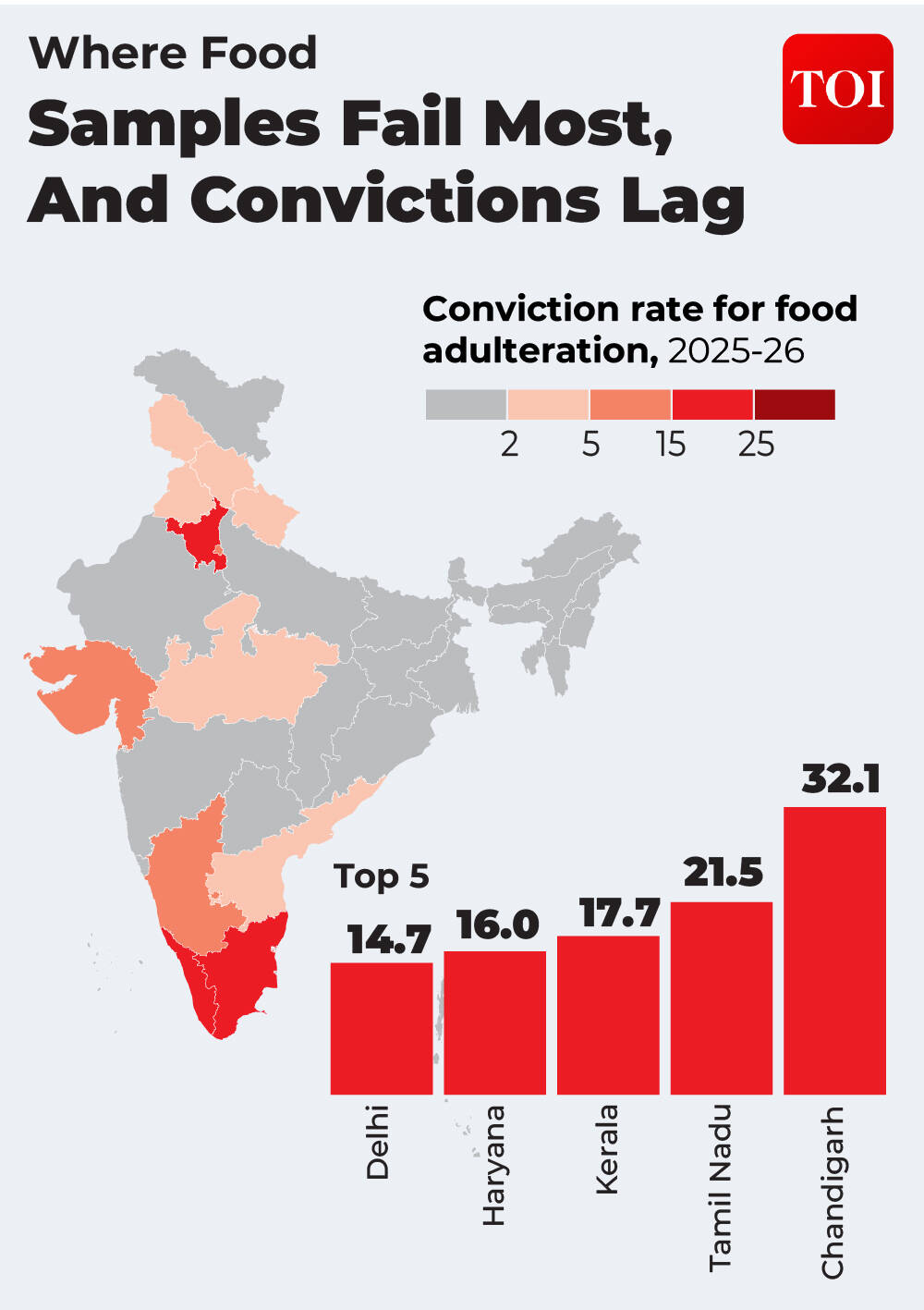
At the same time, the conviction rate has gradually increased, rising from 2% in 2021-22 to 4.8% in 2025-26. However, monetary penalties remain the more common form of action against violators.
UP finds highest share of violations
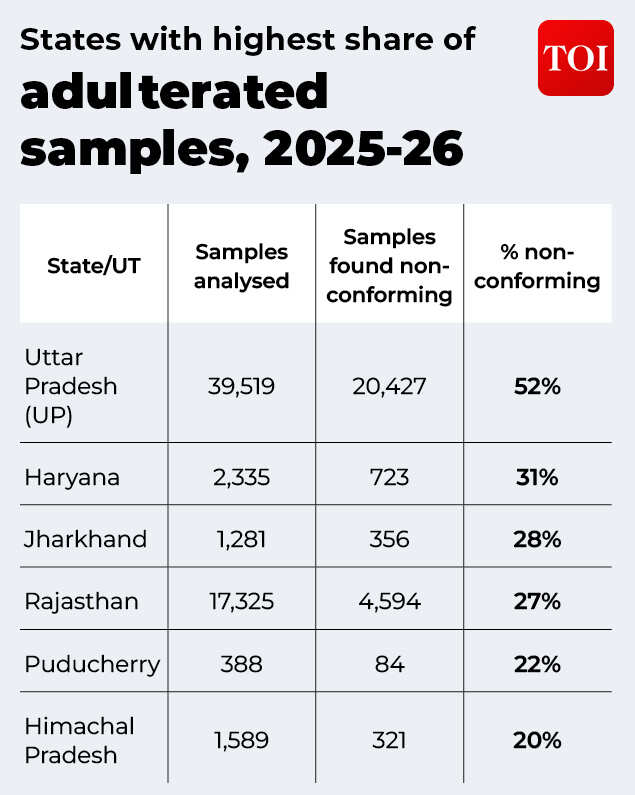
Uttar Pradesh recorded the highest proportion of non-conforming samples among the states listed, with 52% of the nearly 40,000 samples tested in 2025-26 found to be non-conforming.The state analysed 39,519 samples and found 20,021 to be non-conforming.Haryana followed with 31%, while Jharkhand recorded 28%, Rajasthan 27%, Puducherry 22% and Himachal Pradesh 20%.
Enforcement gaps raise concerns over food safety
Tamil Nadu analysed the highest number of samples among the larger states, with nearly 45,000 tests, and also recorded the highest conviction rate among those states.Chandigarh recorded the highest conviction rate overall at 32.1%, followed by Tamil Nadu at 21.5%, Kerala at 17.7%, Haryana at 16% and Delhi at 14.7%.The data points to a sharp gap between the scale of food safety violations detected through testing and the number of cases that ultimately result in convictions.
Testing reveals gaps in India’s food safety system
Staff shortage adds to enforcement challenge
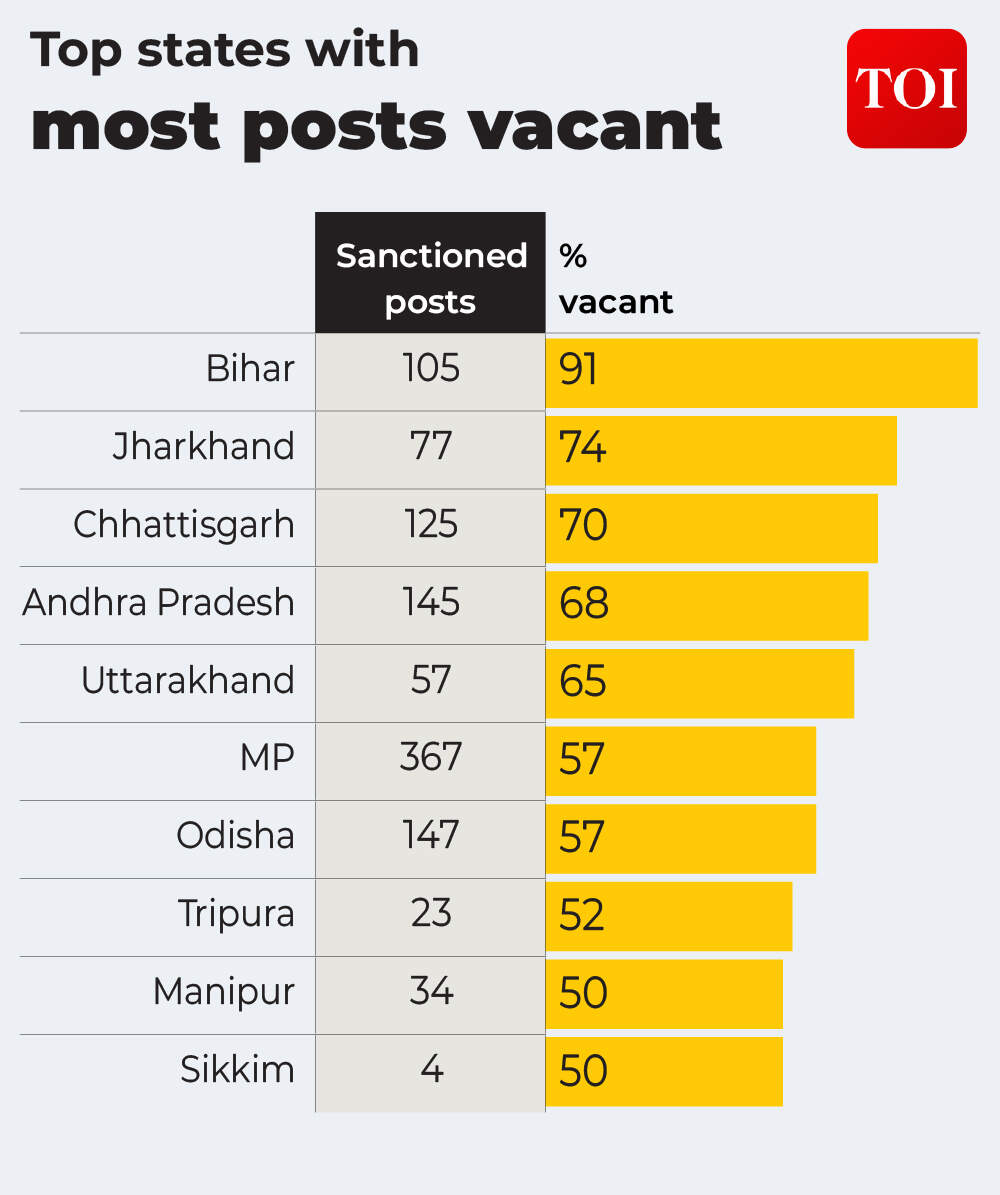
Shortages in food safety personnel are another major constraint on monitoring and enforcement.Bihar has the largest gap among the states listed, with 91 of its 105 sanctioned food safety posts vacant. Jharkhand has 74 vacancies against 77 sanctioned posts, while Chhattisgarh has 70 vacancies against 125 posts.
Shortages in food safety staff hamper monitoring and enforcement.
Andhra Pradesh has 68 vacancies out of 145 sanctioned posts, followed by Uttarakhand with 65 vacancies out of 57 sanctioned posts, according to the data.Haryana has 57 vacancies against 367 sanctioned posts, while Odisha has 57 vacancies against 147. Tripura has 52 vacancies against 23 sanctioned posts, Manipur 50 against 34 and Sikkim 50 against four.The staffing gaps limit the ability of state authorities to regularly inspect establishments, collect samples and pursue violations through the enforcement process.
Milk, dairy among frequently flagged foods
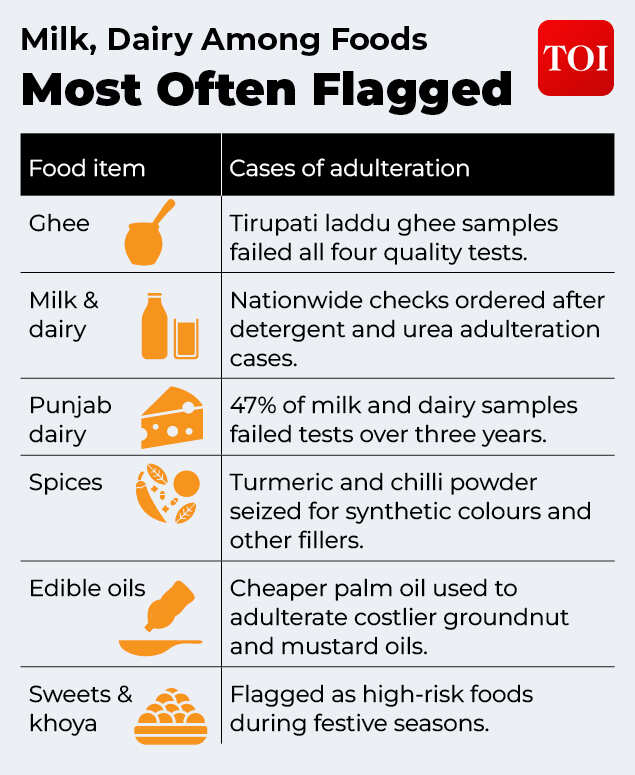
Milk and dairy products, ghee, spices, edible oils and sweets remain among the food categories frequently flagged in regulatory actions and recent cases.In one major case, ghee supplied for the preparation of Tirupati laddus came under scrutiny after samples failed quality tests amid allegations of adulteration with vegetable oils and animal fats.Milk and milk products such as paneer and khoya have also faced increased scrutiny. The Food Safety and Standards Authority of India ordered a nationwide crackdown between September and October following cases involving alleged detergent and urea adulteration in Uttar Pradesh and Maharashtra.
Milk and dairy products among food samples that continue to fail safety standards.
In Punjab, 47% of milk, cheese and dairy samples reportedly failed tests over a three-year period. Cheese was identified as particularly vulnerable to adulteration involving starch and chemical additives, with 255 of 531 samples failing tests in 2024-25 alone.
Share your thoughts in the comments
Be respectful · TOI community guidelines
Spices such as turmeric and chilli powder have also been the subject of seizures over adulteration involving synthetic colours, wood dust and other unsafe fillers.Edible oils are another concern, with cheaper palm oil being used to adulterate more expensive oils such as groundnut and mustard oil.Sweets and khoya are also regularly identified as high-risk categories in FSSAI advisories during festive periods, when demand rises sharply.The figures underline the challenge facing India’s food safety system: while testing has expanded and the detection of violations remains significant, limited staffing and the relatively low rate of convictions continue to constrain enforcement.