
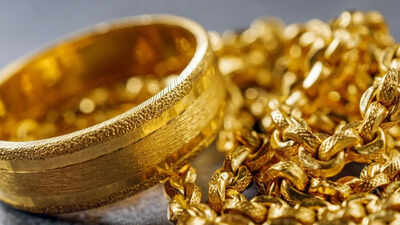
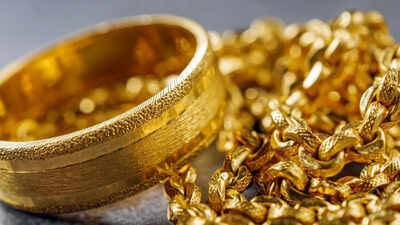
Gold hallmark numbers are often overlooked, yet they quietly reveal one of the most important details about jewellery. Most people only notice them after years of wearing a ring or necklace, when curiosity finally kicks in. These tiny stamps, like 375, 585, 750, 916, and 999, are not random. They are a direct measure of gold purity. Experts say they work as an international language for gold content, used across countries to standardise value and quality. Once you understand them, the whole piece of jewellery starts to make more sense. It stops being just an accessory and becomes something measurable, almost transparent in its composition.The idea behind hallmark numbers is quite simple, even if it looks technical at first. Each number represents how many parts out of 1,000 are pure gold. So a higher number means more gold content, and a lower number means more mixed metals.
What 375, 585, 750, 916, and 999 really mean in gold
Why does lower and higher carat gold feel different
When gold has a lower carat, it usually feels tougher because more metals like copper or zinc are mixed in. Higher-carat gold is a different story. It has more pure gold in it, so the colour looks deeper and richer, but the metal itself becomes softer. Over time, that softness means it can pick up marks or dents more easily if it’s worn often.A 9K piece is often chosen for everyday use because it’s practical and long-lasting, while a 22K piece is more about tradition and appearance, but it usually needs a bit more care. What people choose often depends on how they plan to wear it and the style that feels familiar in their region.
Indian hallmarking system and gold certification
Gold has long been considered a valuable financial asset in India, particularly in rural areas where it serves as protection against inflation and emergencies. Since pure gold is soft, it is alloyed with other metals for jewellery making, increasing the risk of adulteration and lower purity. The complex design and gold plating used in Indian jewellery also make purity testing difficult.In 2000, the government appointed the Bureau of Indian Standards (BIS) as the sole agency responsible for implementing gold hallmarking in India. The objective was to ensure purity, protect consumers from cheating, improve export competitiveness, and strengthen India’s gold jewellery market. Later, a silver hallmarking scheme was introduced in 2005. The Government of India made hallmarking mandatory for gold jewellery in selected districts through a Quality Control Order issued on 23 June 2021. The rule applies to 14, 18, and 22-carat gold jewellery.Under the BIS hallmarking system, jewellers must register with BIS to sell hallmarked jewellery. Registered jewellers submit jewellery to BIS-recognised Assaying and Hallmarking (A&H) centres, where the purity is tested and certified. BIS has also introduced a fully digital and automated hallmarking system that tracks the testing process online and generates a unique six-digit alphanumeric Hallmark Unique Identification (HUID) code for each jewellery item.The new hallmark now contains three marks:
- BIS logo
- Purity/fineness mark (such as 22K916)
- Six-digit alphanumeric HUID code
Where can you find these marks
Hallmark numbers are usually hidden in small places. On rings, they sit inside the band. On necklaces, they are often near the clasp. Bracelets may have them on a small link close to the fastening. Watches tend to have them inside the case back. They are often so small that you might need a magnifying glass or a phone camera zoom to read them clearly. Some pieces do not show visible marks at all which does not automatically mean they are fake. Older jewellery or imported items may follow different rules or have worn markings.
How hallmark numbers influence jewellery value
These hallmark numbers are closely linked to value, but they are not the only factor. A higher number generally means more gold content per gram, which usually increases the price. However, weight, market rates, and buyer margins also play a role. Many people only realise this when they try to sell their jewellery. Two pieces that look similar can have very different values depending on their purity. That is why understanding these numbers matters. They are not just stamps. They are a quick way of decoding what your jewellery is actually made of, even before any professional testing takes place.