This is CNBC’s Morning Squawk newsletter. Subscribe here to receive future editions in your inbox.
Good morning. Several pharmaceutical stocks are climbing this morning amid the recent hantavirus outbreak. Officials say the public health risk from the virus is low.
Stock futures are little changed this morning following a winning week for all three major indexes.
Here are five key things investors need to know to start the trading day:
1. No deal
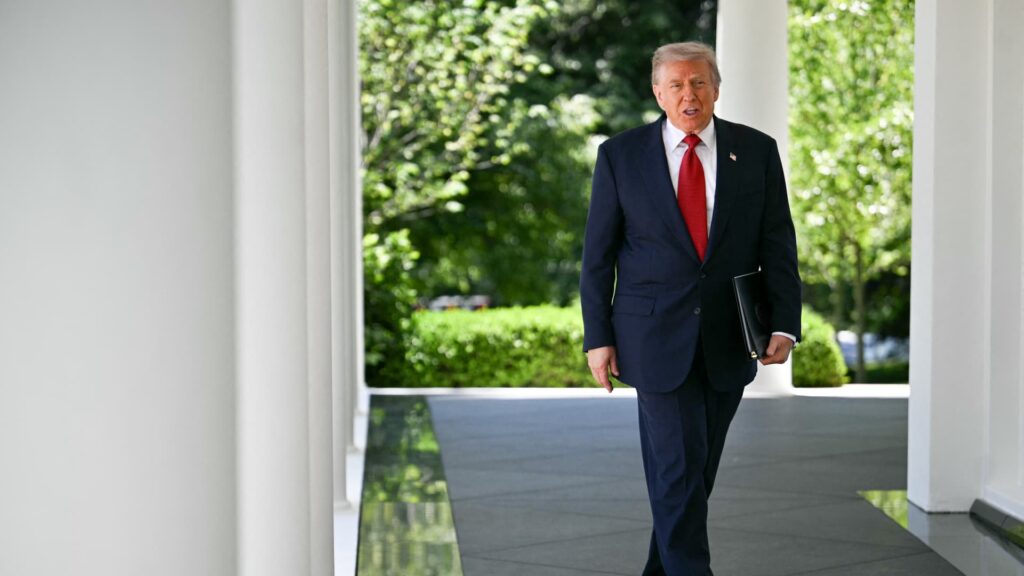
US President Donald Trump exits the Oval Office and arrives to speak during a Mother’s Day luncheon in the Rose Garden of the White House in Washington, DC, on May 8, 2026.
Jim Watson | AFP | Getty Images
President Donald Trump rejected Iran’s counteroffer to the U.S. peace proposal yesterday, calling Tehran’s response “TOTALLY UNACCEPTABLE” in a Truth Social post.
Here’s what to know:
- Iran’s proposal reportedly focused on the need to end the conflict and lift sanctions on Tehran.
- Israeli Prime Minister Benjamin Netanyahu told CBS in a taped interview aired last night that the war was “not over,” saying there’s “still nuclear material, enriched uranium that has to be taken out of Iran.”
- Oil futures rose overnight following Trump’s rejection of Iran’s proposal, as investors worry that prolonged conflict will further strain crude supply.
- Industry executives have already been warning stakeholders that the war has significantly changed the world’s energy market.
- Stock futures are near the flatline this morning despite rising oil prices. Follow live market updates here.
2. Search engine
Signage outside the Google headquarters in Mountain View, California, US, on Tuesday, Feb. 3, 2026.
David Paul Morris | Bloomberg | Getty Images
The S&P 500 and Nasdaq Composite finished last week at record highs, both posting their longest weekly winning streaks since 2024. Alphabet is partly to thank.
The Google parent’s stock has climbed more than 160% in the last 12 months, making it the best performing trillion-dollar U.S. tech company in that period. Alphabet, increasingly seen by traders as an artificial intelligence winner, briefly topped Nvidia‘s market cap in extended trading last week.
The short-lived feat came as Nvidia lagged behind other chipmakers, such as Advanced Micro Devices and Intel which surged last week. As CNBC’s Kristina Partsinevelos and Ashley Capoot report, Nvidia has ramped up its AI investing, making more than $40 billion in equity bets so far this year.
3. Content is king
YouTube CEO Susan Wojcicki speaks onstage during the YouTube Brandcast 2018 presentation at Radio City Music Hall on May 3, 2018 in New York City.
Source: YouTube
Many YouTube content creators are getting help from a network of strategists in hopes of boosting their virality — and income — on the video platform. These so-called YouTube whisperers charge thousands of dollars a month for insights on what resonates with viewers and how to master the algorithm.
YouTube is expected to spotlight many of its biggest creators during its upfront advertising presentation in New York City this week. The Alphabet-owned platform accounts for more than 12% of all U.S. streaming, beating out major media companies like Netflix and Disney, according to Nielsen.
Get Morning Squawk directly in your inbox
4. Capital spend
MCLEAN VA- FEBRUARY 08: The sun flares over the top of the Capital One logo outside of their corporate headquarters complex on February 8, 2024, in McLean, Va. (Photo by J. David Ake/Getty Images)
J. David Ake | Getty Images News | Getty Images
Sanjiv Yajnik, the president of Capital One Auto, isn’t too worried about rising automotive debt or “forever loans.” As he told CNBC’s Michael Wayland, that’s because consumers aren’t necessarily spending much more of their paychecks on cars.
Capital One Auto data shows that the percentage of income spent on vehicles has remained nearly flat since 2019. Monthly car payments have jumped by $390 to $525 in the same period, but growing earnings have meant that the payment-to-income ratio has remained at around 10%.
“The consumer is being cautious. They’re being responsible. This is a much healthier way to do things than the alternative, because it’s not a discretionary spend,” Yajnik told CNBC.
5. Strolling in
Target has rolled out “baby boutiques” to about 200 stores where customers can touch, feel and test items like car seats and strollers. It’s also added premium brands like UPPAbaby and Stokke.
Melissa Repko | CNBC
Target wants to win families back from Walmart. As CNBC’s Melissa Repko reports, its plan starts in the baby aisle.
The retailer opened “baby boutiques” in around 200, or roughly 10%, of its stores this spring. In the revamped section, shoppers can test out high-end products such as a $1,000 stroller from UPPAbaby as well as some of its 2,000 new baby items.
Families are a key consumer base for Target as it aims to reverse a multiyear sales slump. Cara Sylvester, Target’s merchandising chief, told CNBC that families with children visit stores twice as much as the average shopper. Plus, those with children below the age of 6 spend twice as much.
The Daily Dividend
Here’s what we’re keeping an eye on this week:
- Tuesday: Under Armour earnings (before the bell); consumer price index for April
- Wednesday: Cisco earnings (after the bell); producer price index for April
- Thursday: Versant Media earnings (before the bell), Figma earnings (after the bell); retail sales data for April
— CNBC’s Sawdah Bhaimiya, Anniek Bao, Garrett Downs, Spencer Kimball, Lee Ying Shan, MacKenzie Sigalos, Samantha Subin, Kristina Partsinevelos, Ashley Capoot, Alex Sherman, Zach Vallese, Michael Wayland and Melissa Repko contributed to this report.
Davis Giangiulio assisted in the production of this newsletter. Josephine Rozzelle edited this edition.
Disclosure: Versant is the parent company of CNBC.