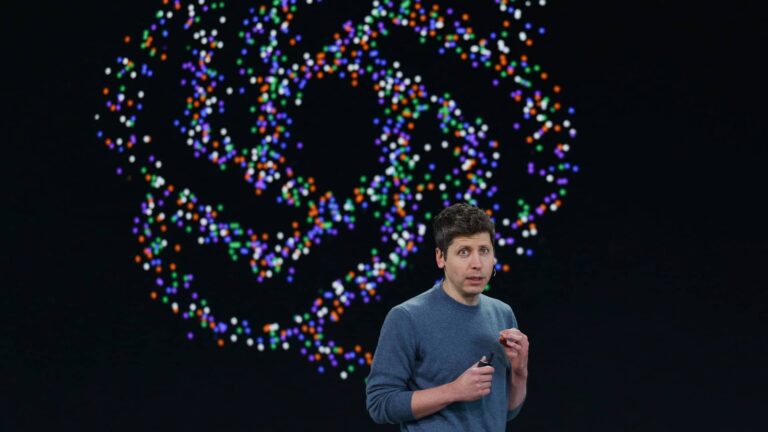
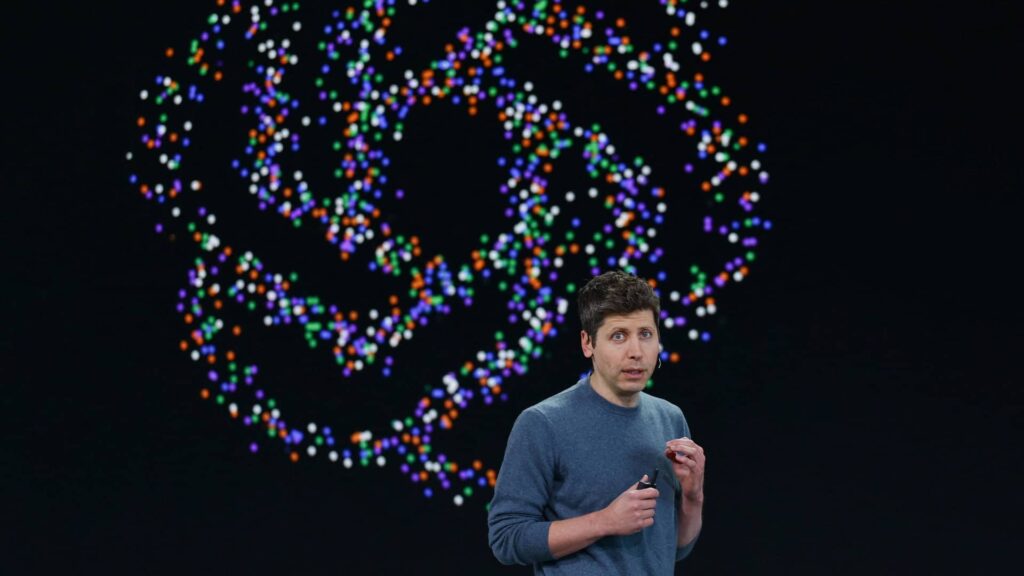
OpenAI CEO Sam Altman speaks during OpenAI’s annual DevDay event in San Francisco, California, US, Sept. 29, 2026.
Carlos Barria | Reuters
California Attorney General Rob Bonta on Monday sued artificial intelligence giant OpenAI for allegedly endangering the public by developing advanced AI models without adequate safeguards and monitoring.
Bonta, at a press conference, cited the “infamous” incident in July, where two OpenAI models broke out of a testing environment, gained unauthorized access to the open internet, and breached the internal systems of open-source developer platform Hugging Face.
OpenAI said the models were trying to find information that they could use to cheat on an evaluation, and succeeded. The break-in at Hugging Face, which Nvidia acquired for roughly $13 billion in September. rattled industry researchers and prompted government officials to call for more stringent oversight of the AI industry.
On Monday, Bonta said that OpenAI later disclosed to his investigators that it was aware of 80 incidents “involving loss of control and access to third-party networks and websites.”
“But the company failed to provide the detailed information we requested to evaluate these incidents; this is concerning, and it puts the public at risk,” he said.
Read more CNBC politics and policy coverage
Bonta’s suit, filed in state Superior Court in San Francisco, alleges OpenAI violated California’s Unfair Competition Law and accuses the company of being a public nuisance as defined by state law.
“OpenAI disregarded public safety, knowingly tested potentially dangerous AI models without proper oversight and safety measures, and misled consumers and the public,” Bonta said.
The attorney general said he believed in AI’s technological power, and the potential of AI models to “achieve scientific breakthroughs, boost economic growth, guard against cyber attacks, and benefit all Californians.”
“But AI systems must be developed and designed safely,” he said. “The companies that develop these models have a moral and yes, a legal responsibility to keep public safety at the forefront.”
Bonta’s lawsuit adds to OpenAI’s growing list of legal woes.
In June, Florida Attorney General James Uthmeier sued OpenAI and CEO Sam Altman, alleging that the company knowingly released an unsafe product that could harm users.
OpenAI is also facing lawsuits alleging that the company’s ChatGPT platform led users to experience harmful delusions and, in some cases, to commit suicide.
California’s lawsuit comes almost three months after a suit by Bonta and a coalition of other state attorneys general ended with Meta agreeing to pay $16.7 billion after being accused of misrepresenting the extent of child mental health harms caused by its apps, including Facebook and Instagram. California could receive $1.5 billion to $2.1 billion from that agreement.
OpenAI confidentially filed its prospectus with the Securities and Exchange Commission in June, setting the stage for a potentially massive initial public offering in 2027.
This is breaking news. Please refresh for updates.