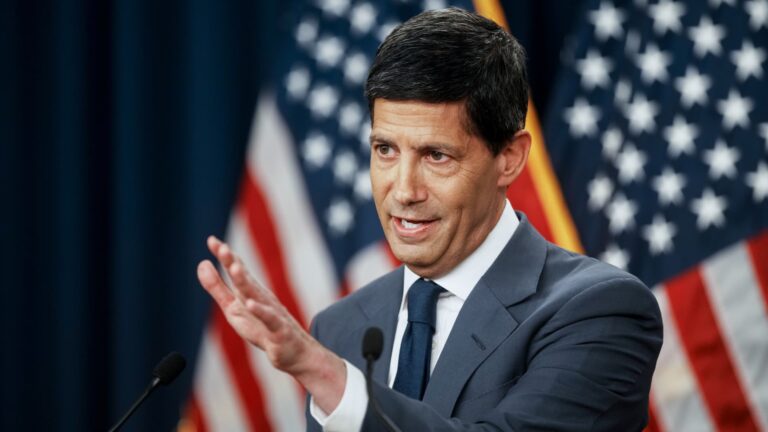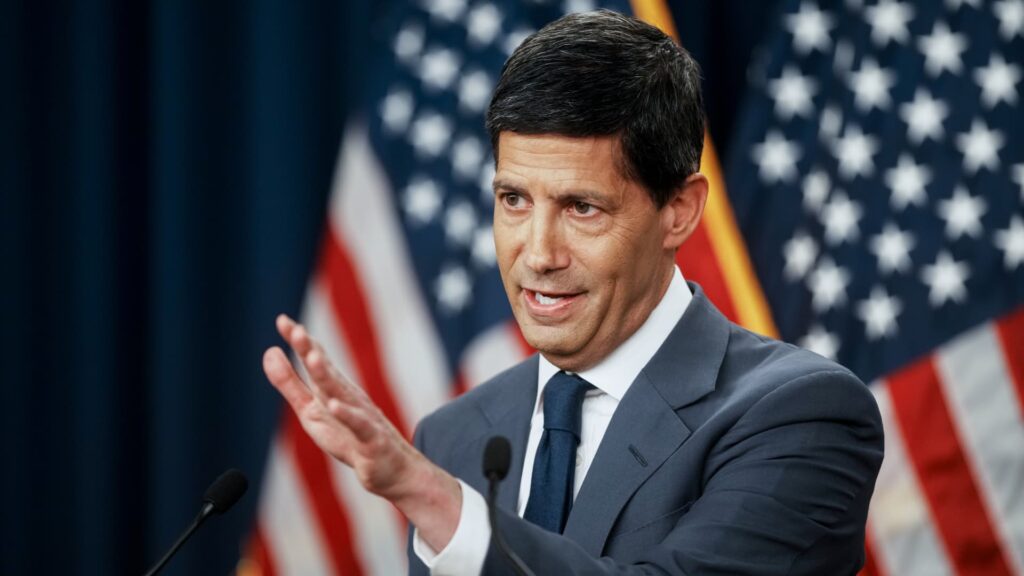
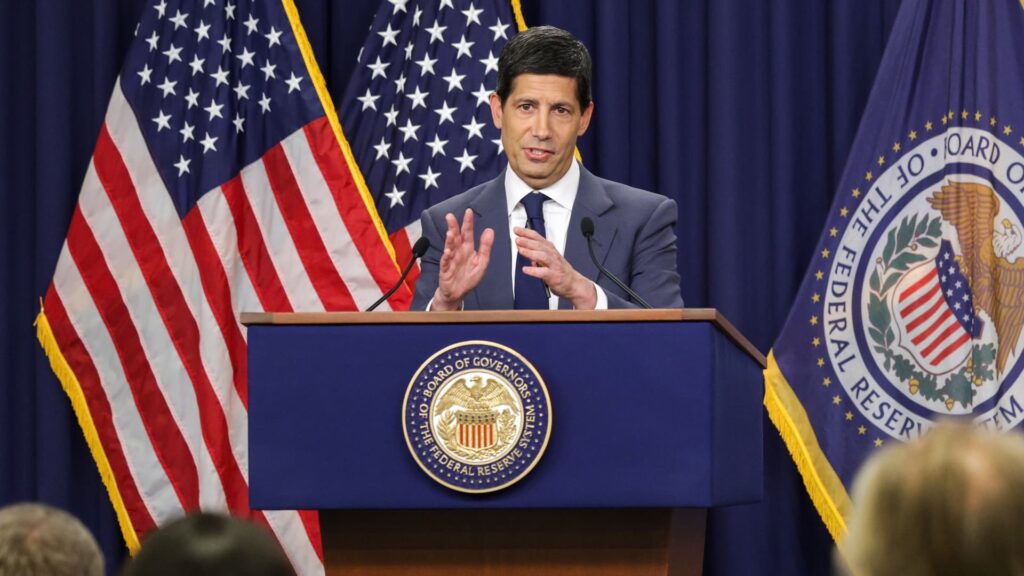
So much for Fed fireworks. It’s time to get back to business. Markets shrugged at the Federal Reserve’s decision to hold interest rates steady on Wednesday. More significant than the Fed’s decision or Chairman Kevin Warsh’s press conference were tech earnings from Microsoft and Alphabet , and a more muted capex outlook from Oracle — the latter a positive catalyst for the stock and the AI trade more broadly. The fact that stocks barely reacted to the Fed could be viewed as a positive. The Fed’s decision was widely telegraphed. And Warsh reiterated that he doesn’t believe in forward guidance, “absent a crisis.” He held true to form in his press conference, which explains why volatility didn’t spike as he spoke. The market now shifts back to fundamentals — namely third quarter earnings — along with the outlook for the AI trade. On those fronts, investors may be getting more comfortable after a bout of volatility triggered by a sharp increase in spreads on neocloud debt. “When you have 36% of the S & P 500 reporting in a single week, 44% of the market cap of the S & P 500 reporting in one week, you tend to have most of everything else take a back seat,” said Art Hogan, chief market strategist at B. Riley Wealth. “The market is focusing on earnings, and thus far the scorecard looks very good,” Hogan said. Tech stocks are rebounding with neoclouds in particular surging more than 16% this week, as shown through the Roundhill Neocloud ETF . Semiconductors are also higher with the iShares Semiconductor ETF climbing more than 7% this week. That revival comes after South Korea memory giant SK Hynix posted record quarterly profit overnight, and after Anthropic filed its S-1 registration statement on Monday to go public. Investors are in the middle of the busiest week of earnings, with 163 S & P 500 companies set to report results. Results from Alphabet and Microsoft were mixed with investors reacting favorably to Microsoft while Alphabet slid after-hours on prospects for higher capex in 2027 . Amazon.com is the next big one, posting earnings Thursday. Companies are beating forecasts at a decent rate, albeit with a slowdown. The S & P 500 is on track to post a fourth straight quarter of above-25% earnings growth, but revenues are coming in only 1.7% ahead of consensus forecasts, down from an average 3.8% beat in the second quarter, according to economist and strategist Ed Yardeni. Earnings have topped estimates by 6.5%, down from more than 8% in the first and second quarters, which both “excluded mark-to-market gains and a tax reversal,” he notes. One positive is that margins are improving, both in tech and beyond. As of October 23, the S & P 500’s forward profit margin forecast was at a record high 16.8%, up 1.4 percentage points year-to-date, Yardeni pointed out in a note. It’s not just a Magnificent 7 story. The forward profit margin for the S & P 493 collectively is up “an impressive” 2.6 percentage points to 14.6% this year, he added. To be sure, a backdrop of higher yields and higher oil could remain a hindrance for the market. And the path for interest rates remain higher, with fed funds futures continuing to price in a quarter-point hike at the conclusion of the Dec. 9 Fed meeting, putting it in the range of 4.00% to 4.25%. The war with Iran remains an overhang. Renewed hostilities, potentially after the midterms, could send oil prices soaring again and derail a market rally. The political outcome also matters. A Democrat sweep of the House and Senate would have more market implications than a split Congress with Republicans retaining control of the Senate. While AI stocks have rebounded a bit, some investors remain cautious, arguing for diversification from the tech-heavy S & P 500. That strategy has paid off this year with Invesco S & P 500 equal weight ETF up more than 13%. Jeffrey Gundlach, CEO-CIO of DoubleLine Capital, told CNBC on Wednesday that he favors a 30% allocation to equities with a focus on the equal-weight S & P 500. “I don’t like the cap-weighted S & P,” he said. “I don’t want all this exposure to the epicenter of the blast radius of the AI problems or developing problems.” Some strategists remain bullish on equities broadly, and see more value in fixed income as yields remain elevated. “While more Fed hikes remain in store in the coming months, we think the current backdrop remains favorable,” said Ulrike Hoffmann-Burchardi, global head of equities at UBS Chief Investment Office in a note ahead of the Fed meeting. “We do not believe a measured tightening cycle will derail the US economy, and investors should maintain diversified equity exposure and use the rise in yields to add selectively to quality bonds,” Hoffmann-Burchardi added.