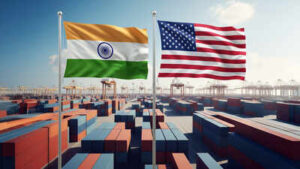
India’s trade agreements with other countries should help mitigate the impact of possible US tariffs if a trade deal does not come through, indicated RBI governor Sanjay Malhotra on Wednesday.Asked about the possible impact on the economy if the India-US trade deal is not finalised, Malhotra said, “The impact depends on what extent tariffs are going to be applied. So it’s premature to answer. But obviously, it will have some negative impact.”“At the same time, we have had a number of trade agreements now in the recent past. Some of them have been operationalized, others are in the pipeline. They will help. The industry at the same time has diversified its exports,” Malhotra said at the post monetary policy press conference.“So all these things will mitigate the effect in case there is an additional tariff on some of the sectors,” he added.Also Read | Will Russian oil be economically viable for India if Trump tariffs return?Malhotra’s comments come within days of Finance Minister Nirmala Sitharaman indicating that the India-US bilateral trade agreement remains deadlocked, with discussions having “reached a plateau”.
Where India-US trade deal talks stand
Sitharaman’s remarks came a few days after US Trade Representative (USTR) Jaimeson Greer indicated that an agreement was not close. “I don’t think there’s something imminent, but we truly have identified the universe of items that are sticking points. We’re working diligently toward them,” he said after his meeting with Commerce and Industry Minister Piyush Goyal.Prime Minister Narendra Modi and US President Trump also discussed bilateral trade during a phone conversation last week, along with defence, energy and other matters.Meanwhile, Sitharaman said, “The agreement negotiations are still ongoing, although we’d like to believe that both sides have reached a plateau beyond which giving or taking might be very, very difficult. But maybe if there are rooms to operate from, both sides would do it,” she said at the Munich Security Conference.Also Read | ‘Rate cuts off the table’: Why RBI hiked repo rate by 25 basis points but also raised GDP growth forecast to 7.1%Sitharaman said the US would look to narrow its trade deficit with India, which stood at an estimated $34 billion last year, down from $41 billion in 2024-25. The gap could reduce further as India has increased its purchases of energy from the US.Officials from India and the US have continued negotiations on the trade agreement and have repeatedly indicated that the talks were close to being concluded. The US has been pushing for greater access for its agricultural products in India through lower tariffs. However, the recent law permitting duties of up to 100% on imports of Russian oil is viewed as another hurdle in the negotiations.An agreement, in any case, can be finalised only after the Indian government has clarity on the extent of additional tariffs that could be imposed on its exports. At present, the USTR has imposed an additional duty of 10-12.5% on more than 50 countries, citing their alleged failure to prevent imports of goods produced using forced labour. The US is also examining structural overcapacity in countries including India, a charge that India has denied.In February, India and the US had agreed on a bilateral trade agreement under which the Trump administration imposed an additional 18% tariff on Indian exports. However, the arrangement was put on hold after the Supreme Court ruled that the “reciprocal tariffs” were illegal.