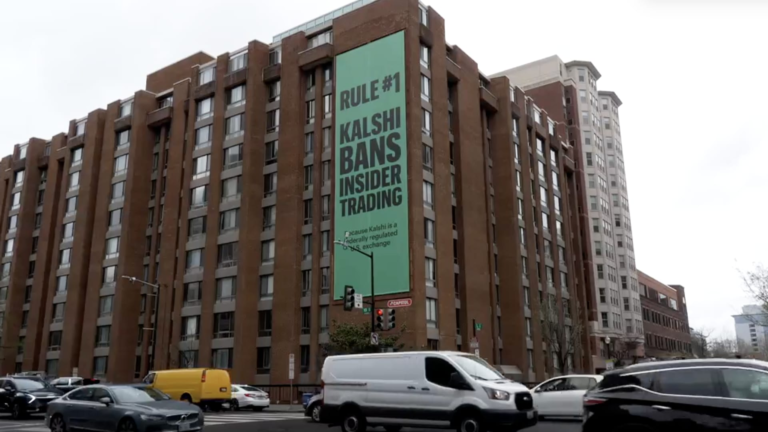
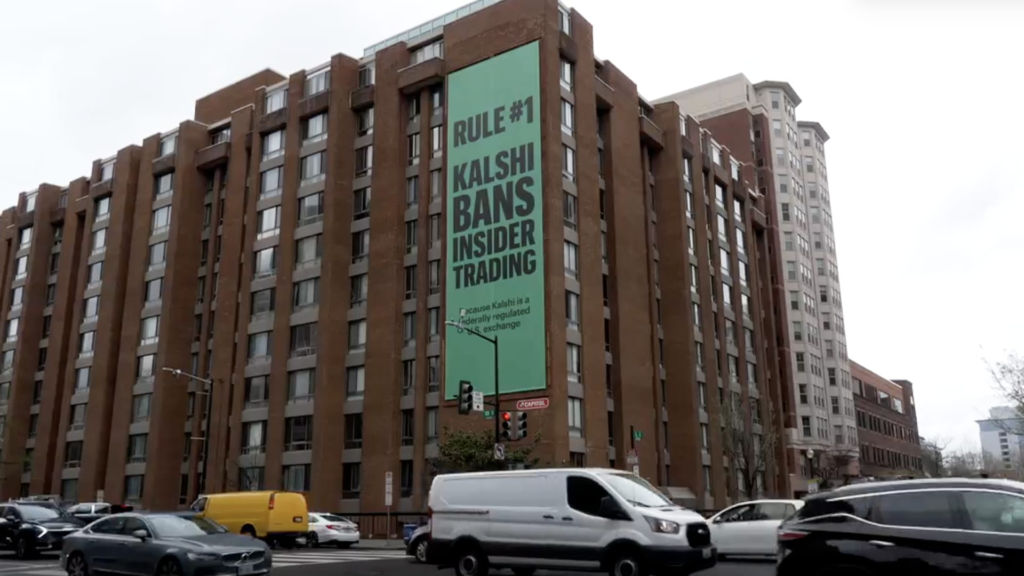
Prediction markets are everywhere ahead of November’s midterm election, and manipulating their election contracts can be achieved with be a small investment.
New research from the Anti-Corruption Data Collective, shared exclusively with CNBC, found that moving most campaign-related prediction markets costs less than the maximum personal campaign contribution allowed under federal law: $3,500. A $3,500 bet can move 97% of midterm-related prediction markets by five cents or more, the report found.
The ACDC works with journalists, data analysts, academics and policy advocates. The report by the coalition, which says its mission is to expose corruption, raises questions about whether individuals can easily manipulate election-related markets in an attempt to create a real-world outcome.
“A manipulated price can ripple through the information ecosystem as if it reflected real momentum,” the report reads. “Not only do the conditions exist in the majority of markets, it may have already happened.”
The report comes as prediction markets surge in popularity around the country, offering thousands of election-related markets for bettors to participate in. Top prediction markets like Kalshi and Polymarket offer yes or no contracts that users can buy to predict whether or not something will happen. Unlike polls, which ask a sample of people for their views or intended choices, prediction markets let participants trade on possible outcomes.
Prediction markets have also prompted intense scrutiny in Washington, with some lawmakers warning they are susceptible to manipulation. Other markets have been heavily criticized, including those offering contracts related to elections, the deaths of prominent people or wars.
ACDC also found that not all markets are moved equally. Underdog markets are cheaper to manipulate, the report found, with 806 of the 1,094 markets priced at five cents or less that it examined costing less than $100 to move five cents. Bigger moves are not that much more expensive; 94% of markets would move 10 cents under a $1,000 bet. Most markets would move 25 cents after bets of $25,000.
The report also identified 353 instances on Polymarket during this election cycle where one or two wallets moved a prediction market by five cents or more.
In those cases, 211 stayed at the price after the initial movement, 62 continued moving and 80 snapped back to their original position.
The report also examines specific price moves from the Texas Senate primary contests.
In December, one wallet bet $1,760 on Polymarket which shifted eventual Republican nominee and Texas Attorney General Ken Paxton’s price down from 55 cents to 50 cents, according to the report. Fourteen hours later, another wallet bet $1,240, which brought Paxton’s price back up from 52 cents to 63 cents. Four days after the push up, Newsweek ran a story about Polymarket showing Paxton in the lead. The price held in the sixties for six weeks, the report said. Paxton’s price did not drop back below 55 until a push from a different wallet.
Further, on Feb. 7, three wallets on Polymarket shifted prices in two different markets, one asking whether Paxton would win and another asking whether Rep. Wesley Hunt, R-Texas, would win the Senate primary, according to the report.
Two wallets bet $23,953 and pushed Hunt up 10 cents on Polymarket. ACDC observed similar shifts on Kalshi. Over the next two hours, another wallet on Polymarket spent $38,830, which pushed the Paxton contract down eight cents. The price on Hunt’s victory slid back down, but two days later, several wallets pushed it back up on both Polymarket and Kalshi, according to the report.
Seventeen wallets, including automated ones, on Polymarket pushed down Paxton’s price the next day. The prices later reverted after public polling continued to show Paxton leading, the report also found.
“The two large, five-figure trades by one or two wallets that will eventually run contrary to the polls, political momentum and eventual outcome — such as the 7 February trades for Hunt and against Paxton — are difficult to explain without a market-moving motivation,” the report reads.
“It’s possible these wallets were unlucky risky bettors believing their bet and position would be profitable rather than active manipulators,” it says. “But the routine quoting of prediction market prices” in news media “for the Texas race provided an opening for perception buying that also explains these large trades.”
Disclosure: CNBC and Kalshi have a commercial relationship that includes customer acquisition and a minority investment.