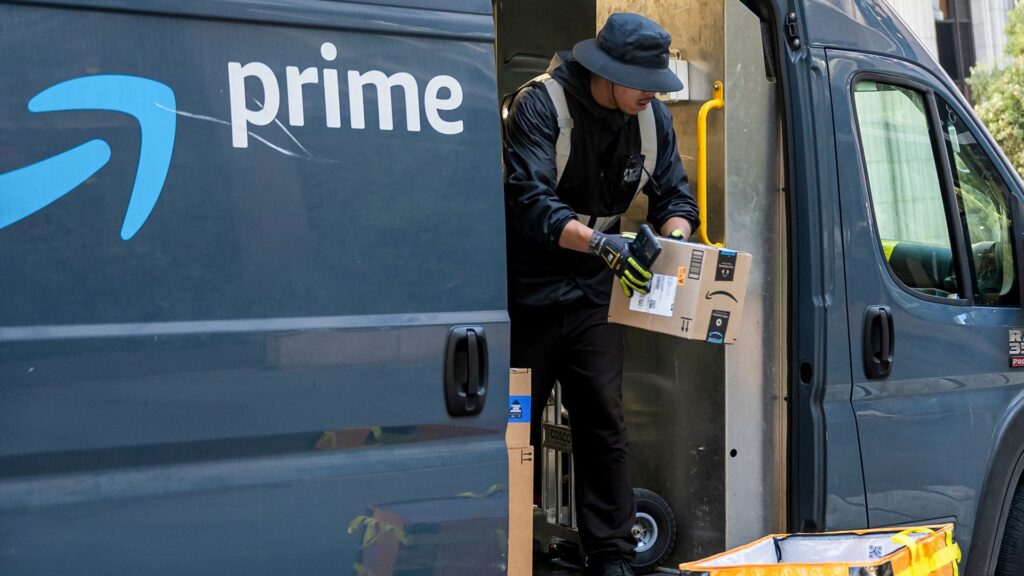
A worker unloads boxes from an Amazon delivery van in San Francisco on Oct. 24, 2024.
David Paul Morris | Bloomberg | Getty Images
New Jersey Attorney General Jennifer Davenport announced on Tuesday that she’s suing Amazon on antitrust grounds, alleging the online retailer abuses its power over third-party delivery contractors to suppress competition and harm workers.
Amazon prevents delivery workers from unionizing, restricts contractors in its delivery network from hiring each other’s drivers, and limits competition for their labor, leading to lower wages and causing employees to “endure harsher working conditions than they should,” Davenport’s office said in a release.
“As our complaint alleges, Amazon built a company worth trillions while subjecting drivers in its delivery network to artificially low pay and punishing working conditions thanks to its overwhelming power in the labor market,” Davenport said in a statement.
Representatives from Amazon didn’t immediately respond to a request for comment.
Since 2018, Amazon has operated its delivery service partner program, which relies on a network of thousands of small contracted companies to handle last-mile delivery of packages from the company’s warehouses to shoppers’ doorsteps.
It’s allowed Amazon to reduce its reliance on major carriers like UPS and FedEx, while enabling it to speed up deliveries.
The model has come under increasing scrutiny from lawmakers, regulators and labor advocates who claim Amazon uses the third-party contractor label to eschew liability and avoid employing its delivery workforce, while still exerting control over things like their wages, schedules and uniforms. Amazon has argued that delivery partners have full control over their operations.
In her complaint, filed in U.S. District Court for the District of New Jersey, Davenport accused Amazon of having a “monopsony” over the market for delivery driver services.
Unlike a monopoly, which usually deals with a company throttling its power over competitors or consumers, a monopsony often refers to a company being the only player in a certain labor market, giving it outsized influence over employment conditions.
The complaint alleges that DSPs are “economically dependent on Amazon” and are unable to operate independently from the company, “leaving them unable to compete for drivers by offering higher pay or better conditions, which is what allows Amazon to hold driver wages down.”
—CNBC’s Jim Forkin contributed to this article