
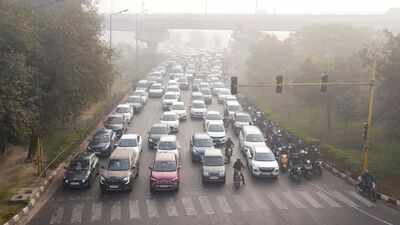
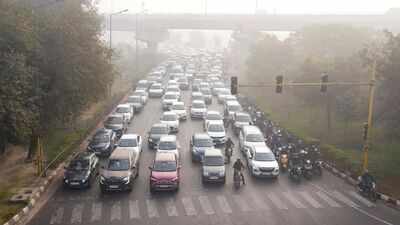
NEW DELHI: From Oct 2028, all new two- and three-wheelers, cars, passenger and goods vehicles (including buses and trucks) would need to have Vehicle-to-Vehicle (V2V) communication system, as per a draft notification of the road transport ministry. The V2V technology is being rolled out to curb collisions and accidents.The recently published draft notification by road transport ministry proposes phased implementation of the V2V communication system and to start with all vehicles in categories L (two- and three-wheelers), M (passenger vehicles) and N (goods vehicles) manufactured from Oct 2027 would be required to comply with the newly-notified automotive standard, AIS-230, wherever they are equipped with V2V communication systems.The technology enables real-time exchange of speed, direction, position, and braking data between vehicles to prevent collisions at blind curves, intersections, or from drivers coming the wrong way without needing a cellular network. Each vehicle needs to be fitted with a device that will automatically detect approaching vehicles for preventing any crash.Unlike conventional vehicle-safety systems, which primarily depend on onboard sensors and driver reaction, V2V communication can provide information beyond the direct line of sight. “It is therefore expected to complement Advanced Driver Assistance Systems (ADAS) and support proactive accident prevention, connected mobility and future intelligent transport applications,” the ministry said.In this case, every vehicle fitted with the V2V communication system will continuously send out their locations, speed and direction as tiny radio signals. They will also relay information on sudden braking by a vehicle ahead, forward collision risks, unsafe lane changes, wrong-way driving and the approach of emergency vehicles.
Share your thoughts in the comments
Be respectful · TOI community guidelines
The receiving vehicle’s system compares this information with its own location, speed and direction to predict a possible collision and alerts the driver for action.At a later stage, govt will also roll out the Vehicle to Infrastructure (V2I) communication system. In this case, sensors are installed with infrastructure, such as signal and power poles, edges of bridges and flyovers, and barricaded areas to alert vehicles.