
United Parcel Service on Tuesday posted second-quarter earnings results that beat Wall Street expectations and raised its full-year outlook, but said it expects domestic third-quarter revenue to be flat.
Shares of the delivery giant sank 5% in premarket trading.
Here’s how the company performed in its second quarter, compared with what Wall Street was expecting, based on a survey of analysts by LSEG:
- Earnings per share: $1.76 adjusted vs. $1.66 expected
- Revenue: $22.8 billion vs. $21.81 billion expected
For the quarter ended June 30, UPS reported net income of $604 million, or 71 cents per share, down significantly from $1.28 billion, or $1.51 per share, in the year-ago period. Adjusting for one-time items, the company reported a profit of $1.5 billion, or $1.76 per share.
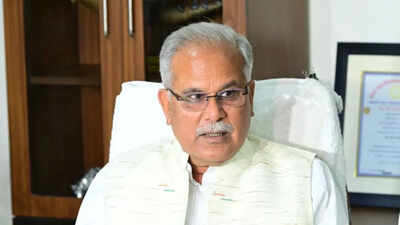
Tune in at 10:30 a.m. ET as UPS CEO Carol Tomé joins CNBC TV to discuss earnings. Watch in real time on CNBC+ or the CNBC Pro stream.
The company also raised its full-year 2026 guidance, now expecting consolidated revenue of $91.2 billion and adjusted diluted EPS of roughly $7.22 per share.
CEO Carol Tomé said on a call with analysts on Tuesday that it was the “fourth straight quarter of delivering results that exceeded our expectations.”
“Going forward, our number one priority remains moving the right packages and the right mix of volume through our network,” she added.
Company executives said on the call that they expect the third quarter to see domestic average daily volume fall in the mid-single digits, due to a seasonal decline and the impact of the company gliding down its operations with Amazon. UPS also expects revenue to be flat year-over-year.
UPS is in the midst of a turnaround strategy aimed at positioning the company for long-term and sustainable growth. The company is focused on enhancing automation in its networks and tapping into growing markets, including healthcare logistics.
Tomé said on a call with analysts that healthcare generated more than $3 billion in revenue for the second consecutive quarter.
“We are the only carrier that provides end-to-end solutions for complex healthcare with our own assets, ensuring complete control, visibility and best-in-class service,” she said.
For the second quarter, UPS reported a 6% increase in domestic revenue, driven by an increase in revenue per piece, and a 12.5% increase in international revenue. Supply chain solutions revenue rose 7.8%, in part due to growth in healthcare logistics.
The company added that it has achieved roughly $1.2 billion of program benefits from its network reconfiguration program, expecting to reach $3 billion by the end of the year.
On a call with analysts, Tomé said the company has successfully completed its glide-down with Amazon, eliminating roughly 2 million pieces per day of “lower quality Amazon volume” and removing roughly $4.5 billion of related expenses so far.
“We now have a leaner, more automated, more agile network that will deliver operating leverage as volume grows,” she said.
The company is also investing in RFID and artificial intelligence to enhance its tracking capabilities, she added, which she said is “the most significant package visibility advancement in a decade.”
Tomé said UPS is “seeing momentum” on the China to U.S. lane, which she said returned to year-over-year growth beginning in May.
“As we enter the second half of the year, we’ve got momentum, even in the face of external factors that could influence our results, like war and fuel price volatility,” she said.