

For the past two years, the artificial intelligence race has been easy to score: bigger models, better benchmarks and whichever company could claim the lead, at least until the next launch.
That scorecard is starting to look incomplete.
As companies move from testing AI to using it in real products and workflows, it’s not longer about tapping the best model, but accessing the one that’s the best fit for a specific job, at the right cost, with the necessary data and in a chosen environment.
That shift is opening the door for a new kind of AI competition, one focused less on model size and more on routing, cost, control and compute.
“The model alone is no longer the product,” Perplexity CEO Aravind Srinivas told CNBC. “It is the harness, the orchestration system that puts the model inside a very capable harness and pairs the model with a lot of tools.”
That means AI products are becoming systems that can decide which model to use, when to use it and what outside tools or company data sources are necessary. A customer service task might not need the most expensive model. A complex coding problem might. A routine internal workflow could run on a cheaper open model. A harder step could be escalated to a more powerful one.
“The answer is always use whatever is the best for the task,” Srinivas said.
The emergence of alternative models comes as corporate America tightens its belt on AI spending, and presents another challenge for OpenAI and Anthropic, which have flourished over the past few years by selling the most cutting-edge technology.
Aravind Srinivas, CEO of Perplexity AI.
CNBC
Perplexity this week previewed a new system for its computer-use product built around GLM 5.2, an open model from China’s Z.ai. The system is designed to let a cheaper model handle more of the work while calling in a stronger model only when needed.
That approach reflects a broader change in the market. Open-weight models, which can be downloaded, tuned and run by companies themselves, are becoming more capable. They are also cheaper to run than premium proprietary models from the biggest AI labs.
Benchmark general partner Peter Fenton said the shift could be dramatic.
“A maybe contrarian view that is becoming consensus is our belief that 90-plus percent of the tokens created will come out of open-weight models over the next 18 to 24 months, possibly even by the end of the year,” Fenton told CNBC.
Tokens are the units of data AI models process and generate.
“The inference margins generated by the frontier model companies, I think, are going to come under pressure when you can run those without the markup that they’re providing, when you have good enough models from open weights,” Fenton said.
Fenton said the move to open models is not only about saving money. In some cases, smaller models that are tuned for a specific task can be faster and perform better than larger general-purpose models.
‘Where it runs and how it runs’
That is one reason Benchmark invested in Ollama, a company that makes it easier for developers and enterprises to download, run and manage open models.
“One thing is where the model’s from and where it was created and trained,” Ollama CEO Jeff Morgan said. “But the more important thing to these businesses we speak to is where it runs and how it runs.”
Morgan said Ollama has been adopted by more than 85% of the Fortune 500, including companies in regulated industries such as aviation, insurance and health care. He said many companies start with smaller models running close to their own data, then expand to larger open models as they get more comfortable.
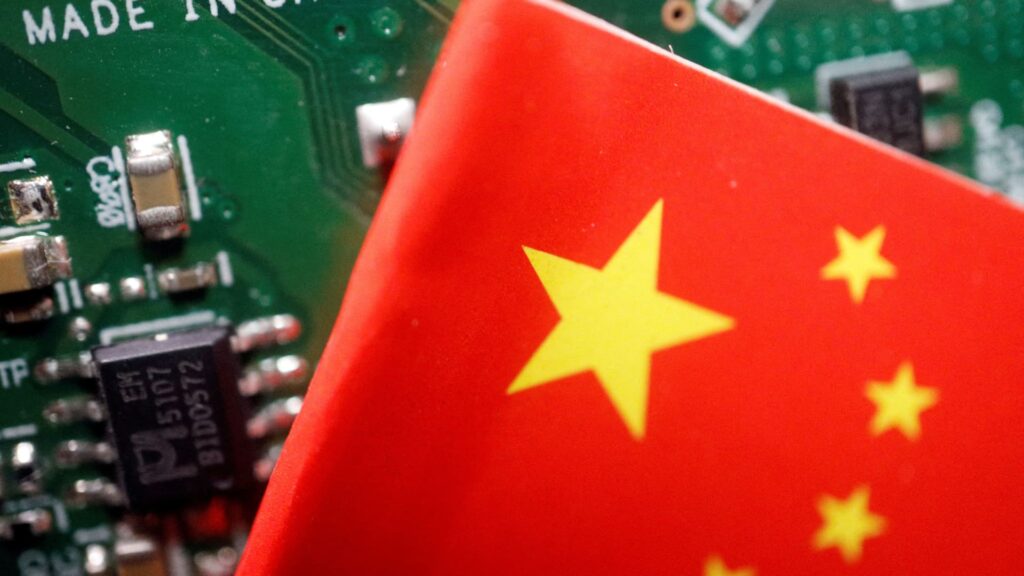
The rise of open models also creates a strategic challenge for the U.S. Many of the most competitive open-weight models are coming from Chinese labs, including Z.ai and DeepSeek. That has made open-source AI a business issue, a policy issue and a national competitiveness issue.
Srinivas said the U.S. should support open models because they make AI more affordable and accessible.
“If you want the benefits of AI to be widely distributed to small businesses in America and American allied countries, then you really need AI to be a lot more affordable,” Srinivas said. “And open source is the only way to do that.”
The shift could also affect the massive data center buildout underway across the tech industry. The current AI boom assumes demand will keep flowing to large cloud data centers filled with high-end chips. Srinivas says some AI work may eventually run locally instead, on devices owned by consumers or businesses.
That wouldn’t eliminate the need for data centers, but it could create a more hybrid AI system, with routine tasks run locally and the most difficult work getting sent to a more powerful model in the cloud.
For investors, the question is whether the biggest AI labs can maintain their pricing power as open models get better and companies become more selective about what they use.
WATCH: OpenAI’s Sam Altman says Chinese open source models are getting very good