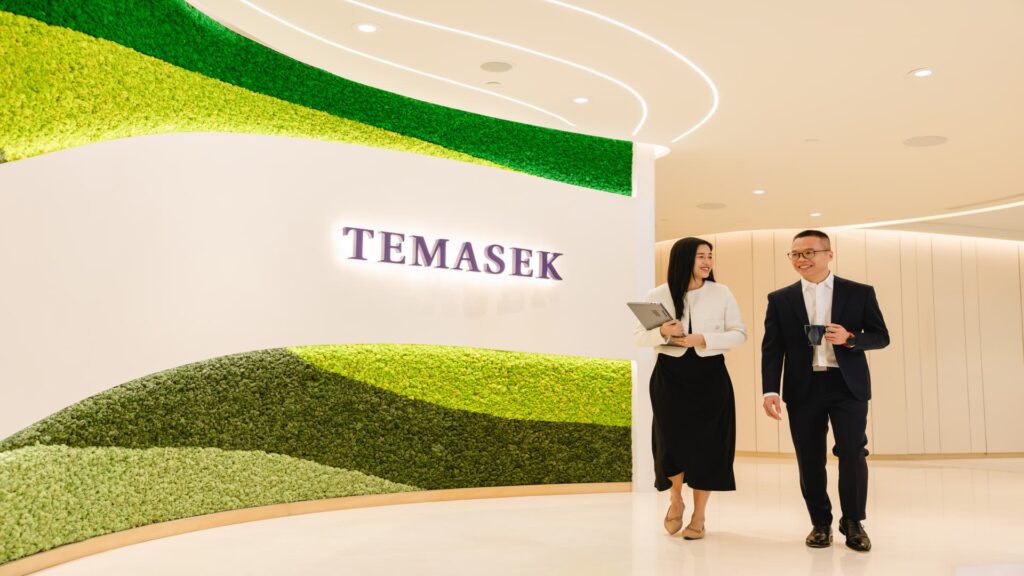
Temasek Holdings increased its China exposure by 10 billion Singapore dollars ($7.7 billion) last fiscal year — the biggest annual increase in five years, as the state investor repositions its portfolio in the country for a new growth cycle led by artificial intelligence and advanced technology.
“We saw a rebound in China,” Chief Executive Officer Dilhan Pillay said at the firm’s annual review Wednesday, adding that the firm’s China exposure has grown by about SG$24 billion over the past decade.
Temasek’s 5-year total shareholder return stood at 4.6% for the year ended March, weighed down by headwinds from China’s capital markets from 2021 to 2024, it said, adding that its exposure last year grew alongside a rebound in market valuations.
While Temasek’s underlying country exposure to China declined to 17%, from 24% in 2016, it remains the fund’s third-largest market after Singapore at 27% and the Americas at 26% — which rose from 24% a year earlier.
Within China, the firm is rotating away from sectors that characterized earlier phases of its portfolio — consumer and real estate — toward what it called “hard tech,” such as AI-related hardware and infrastructure, robotics, biotech, energy transition.
China “is no longer the high-growth economy — it’s becoming a maturing economy,” said Chia Song Hwee, CEO of Temasek Global Investments. “We need to be selective in when we invest [and] construct a portfolio that is more relevant in this current regime.”
For consumption, Temasek sees opportunities in spending on experiences over goods, and homegrown consumer brands that have proved innovation capabilities, over foreign brands. But recovery in domestic consumption remains “uneven and not yet broad-based,” it said, and additional policy easing remains unlikely.
Luckin Coffee, ANE
New investments made during the year included Luckin Coffee and logistics group ANE in China, Anthropic and OpenAI in the U.S. and Ermenegildo Zegna Group in Europe.
Temasek, which had held indirect investment in the coffee chain through private equity firm Centurium Capital, disclosed a 6.4% stake in Luckin in a May regulatory filing.
A Luckin Coffee shop in New York, US, on Tuesday, Dec. 16, 2025.
Christian Monterrosa | Bloomberg | Getty Images
Once on the brink of collapse after a $300 million fraud scandal that forced it to delist from Nasdaq in 2020, the coffee chain has staged a sharp comeback. In 2022, Luckin announced that it had completed the restructuring of its financial debt and emerged from Chapter 15 bankruptcy proceedings.
Temasek invested in Luckin only after the company’s legal and governance issues were resolved, Chia said, brushing off questions about a relisting, saying Luckin’s priority should be building a durable business first.
“We decided to invest because we believe that the shareholder and management team has been doing the right thing and on the right trajectory, so it was only then that we invested,” Chia said.
Temasek was also part of a consortium with Centurium Capital and True Light Capital, a private equity firm under Temasek, that took ANE private in February.
The state investor’s net portfolio value surged to a record SG$518 billion ($401 billion) for the year ended March 31, up SG$49 billion, marking its third straight annual increase.