

More than 100 days into the Middle East crisis, the Strait of Hormuz remains the world’s biggest shipping question mark. Iran has now signalled that the strategic waterway will reopen, but not quite as before.According to Iran’s ambassador to Moscow, the route will operate under new conditions set by Iranian and Omani authorities, including fees for services linked to the passage.In an interview published on Monday by Russian newspaper Izvestia, Iranian ambassador to Russia Kazem Jalali said, “Of course, this strait will be open, but with new conditions to be determined by the Iranian and Omani authorities.”He added, “We understand that Iran and Oman provide certain services related to this strait. And fees will be charged for those services.”
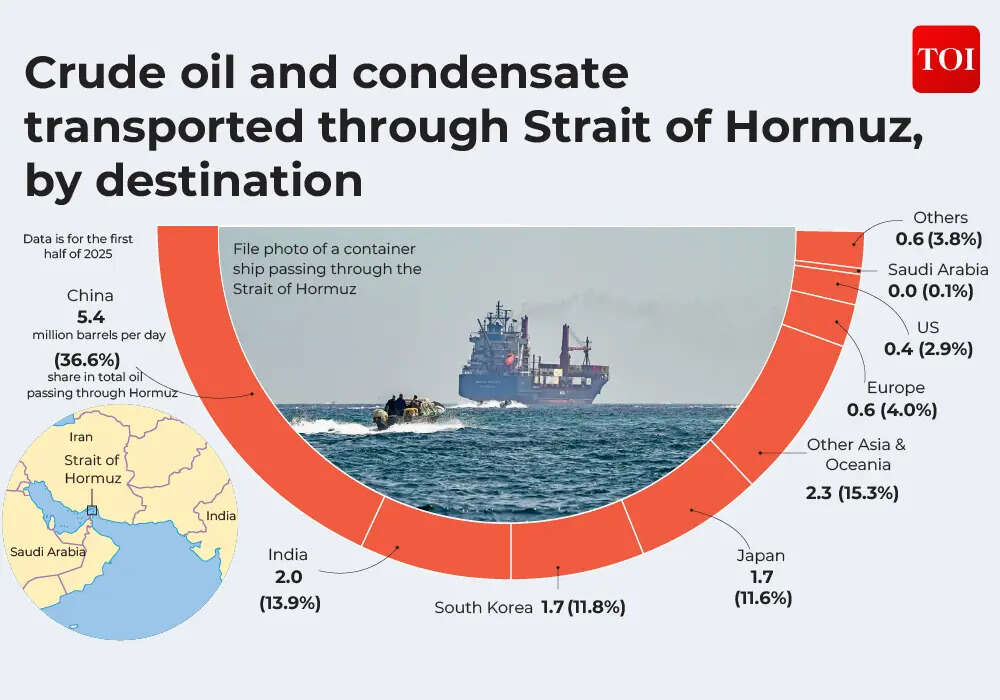
The remarks come as oil flows through the Strait of Hormuz remain severely disrupted after US-Israel launched joint strikes on Iran. Before the conflict, the passage handled around one-fifth of the world’s oil supply. While several tankers have recently departed the Gulf, the movement of oil and liquefied natural gas through the strait continues to be significantly affected.Iran has maintained that any permanent peace agreement should permit it to levy fees on ships transiting the strait. According to its position, the charges would vary depending on the type of vessel, its cargo and prevailing conditions.The proposal has faced strong opposition from US President Donald Trump, Reuters reported. In late May, the United States warned Oman against participating in any effort with Iran to impose transit tolls. US reasury secretary Scott Bessent said at the time that Oman’s ambassador had informed him there were no plans to introduce such charges.Meanwhile, Israel said on Monday that it had struck military targets in western and central Iran, despite reports that Trump had urged Israeli Prime Minister Benjamin Netanyahu to avoid further attacks.The Middle East war, that began back on February 28 has kept oil markets on edge, pushing prices higher. Global benchmark brent crude has stayed largely beyond the $100 per barrel mark, even crossing $125 per barrel, from the pre-war levels of $70 per barrel. Now, amid hopes of descalation in the region, oil prices have fallen in the range of $100 to $90 per barrel.