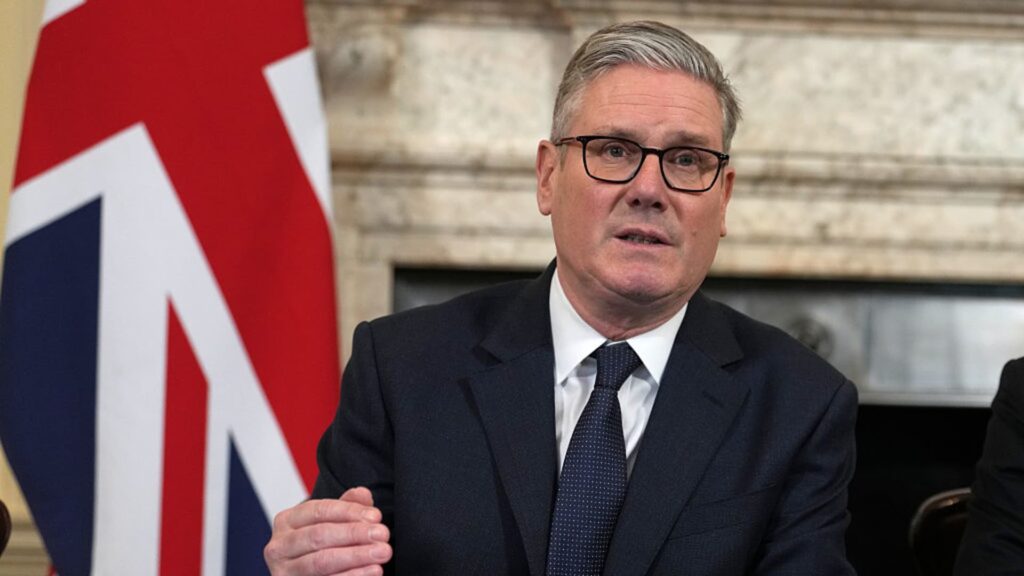

LONDON, ENGLAND – JULY 9: British Prime Minister Sir Keir Starmer hosts the first roundtable of regional English mayors with Andy Burnham (R) Mayor of Greater Manchester, at Downing Street on July 9, 2024 in London, England. Sir Keir Starmer hosted the first roundtable with metro mayors from 11 regions across England. (Photo by Ian Vogler – WPA Pool/Getty Images)
Wpa Pool | Getty Images News | Getty Images
Andy Burnham, the politician who threatens to topple U.K. Prime Minister Keir Starmer’s leadership, has called for tighter regulation on AI, Big Tech and key industries if he returns to central government.
“Lest we forget: the principal cause of the 2008 crash was a failure of regulation,” the Labour Party politician and Mayor of Greater Manchester said in an article published by U.K. newspaper The Times on Thursday evening.
“So how can a new wave of deregulation plausibly be the answer to the problems we have experienced since? This is … the kind of thinking that would doom us to repeat past mistakes and, if we’re not careful, prevent us from protecting children by failing to regulate social media, artificial intelligence and big tech.”
Burnham — who is not yet a sitting member of the U.K. parliament — will run in the June 18 by-election in Makerfield, north-west England.
Being elected as a lawmaker in Westminster will clear the way for him to launch a formal leadership challenge to Starmer, whose premiership has been under intense pressure following a crushing defeat for the ruling Labour Party in the U.K.’s local elections. The results have left Starmer’s position hanging in the balance, as dozens of lawmakers call for his resignation and speculation mounts that some within his own ranks understood to be planning leadership coups.
Prediction market platform Polymarket currently ranks Burnham as the most likely next Prime Minister of the U.K., with a 56% chance of taking over in 2026 compared to a 26% likelihood of Starmer staying in the job for the remainder of the year.
Starmer has vowed to continue on in his role, but a leadership vote will be put to party members if a challenger gains enough support from sitting politicians.
The prospect of Burnham, considered more left-leaning than Starmer, replacing the incumbent prime minister has sent jitters through bond markets in recent weeks. Investors in U.K. government bonds, known as gilts, appeared to be largely supportive of Starmer and his finance minister Rachel Reeves remaining in their roles, due to their commitment to bring public borrowing and spending under control.
But Burnham is widely expected to launch a campaign to oust Starmer should he win a seat in parliament.
Burnham, who has been colloquially labeled Labour’s “king in the north,” attempted to placate markets last week, rowing back on previous comments in which he appeared to suggest the U.K. was “in hock to the bond markets.”
His Thursday op-ed, however, was written in response to an essay published by Tony Blair, in which the former British prime minister accused the Labour Party of risking the country’s future by prioritizing internal politics over economic growth and competent governance.
‘Toxic, divisive politics like the US’
Burnham argued in his rebuttal that “40 years of neoliberalism” and the “acceptance of the deregulation and privatization of essential services” have damaged many communities across Britain.
“Trickle-down economics did not in the end trickle down very much at all,” he said, adding that a failure to change course would put the U.K. at risk of becoming “trapped in toxic, divisive politics like the U.S., with all the social harm that comes with that.”
“The lesson from Greater Manchester is that you can’t just leave it to the market,” Burnham added, pointing to intervention in transport services in the city as an example of regulation that drives growth.
“If you want higher growth in areas that don’t have it, you need strong public control and direction over both the investment strategy and the enablers of a more productive economy, such as transport, energy, water, education and housing.”
— CNBC’s Holly Ellyatt and Hugh Leask contributed to this report.